Greenwald on bloggers being absorbed, and WikiLeaks mistakes

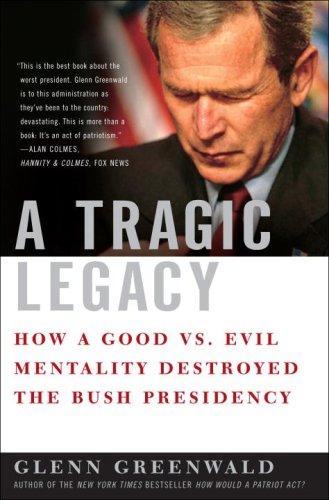
This is from an interview with Glenn Greenwald, one of the writers who blogs on Salon.com who I admire and follow with a great deal of interest (whether I always agree with him or not).
He’s addressing the idea I’ve tried to express about MEDIA ‘absorbing‘ new media (bloggers etc) … and the not-that-old sense of rivalry that existed between bloggers and ‘the member(s) of the journalist class’.

Worth a read.

I don’t think there is much of a distinction — at least, not nearly the distinction there used to be — between bloggers and establishment media outlets. When the blogosphere first emerged, it was really intended as a challenge to different institutions.

One was the Democratic Party and its propensity to capitulate to conservatism, drifting toward centrism and corporatism in lieu of real liberalism. The other one was the media for what the blogosphere perceived as a pro-Bush bent.

Though many liberal bloggers thought that was because they were the conservative media, I’ve made the point that I felt it was because the media were pro-government, and it just happened to be Republicans who were in power. But I think that the idea that bloggers are this oppositional force to the media has eroded, in part because some of the more successful bloggers have been absorbed into these media institutions, and at the same time, a lot of these media institutions—which kind of ignored blogging for a long time, and then paid attention to it only to mock it—have decided that they now need to be bloggers.

Another notable shift is that the liberal blogosphere really was an outside, marginalized force at first, and took pride in that. When it largely devoted itself to Barack Obama’s election, though, it became more an organ of the Democratic Party than it did any kind of insurgent or outsider force. That’s a little oversimplified; there certainly are a lot of bloggers who are still in that outsider role. There are some, like Matt Yglesias, who have one foot in one camp and one in the other. But I do think the dichotomy has blurred a lot over the last several years.

Still, the blogging ethos has shaped and affected how many in the media report. So even though the New York Times is a lot larger platform that Salon, to use your example, I know that everybody at the NYT who writes about the things I write about read my blog, so what I write can influence what they write. The same goes for MSNBC hosts or news segment producers. So I think influence can be measured in different ways. One is the size of readership. But I think influence is more than the number of readers you have; it’s your reach.

One of the good things about the change the media has undergone is that it has amplified voices. So if you criticize a member of the journalist class, 15, 20 years ago they could easily ignore you, and the only way to hear about it was basically a letter to the editor—it was purely a one-way conversation. Now, it’s a two-way conversation, so if you’re a journalist, and you write something deceitful or propagandistic or sloppy or wrong, everywhere you turn, you’re going to hear it: in your email, on Twitter, in the comment section of what you write, you’re going to be besieged with criticism, and blogs have really fueled that. Something like that influences people and affects how they work.

I also share his view of Wikileaks:

I think it’s important to remember that WikiLeaks is an extremely young organization engaged in pioneering work. There is no template for what they’re doing, so it is completely to be expected that they are going to make mistakes—and they have made mistakes. I criticized them for insufficient care in redacting the names of civilian informants in Afghanistan, although they did ask the government to help them do that and the government refused, and the first duty to protect sources lies with those whose sources they are.

Still, WikiLeaks has the duty as well to protect innocents the best it can when it leaks information. I also criticized them for this last unredacted dump, which was necessitated by security breaches that I think were more the fault of the Guardian. But again, if you’re going to be in the business of holding yourself up as computer security experts and you tell people they can leak to you and be protected, then you have the responsibility to safeguard that information. But on the whole, I think WikiLeaks has done so much more good than bad.

Read the whole Q&A at ThePolitic.org — Holding Justice Hostage: An Interview with Glenn Greenwald

– P


iOS 5: Tips, Tricks & Hidden Features

OK, just because I upgraded to Apple’s new iOS5 yesterday (with millions of others) I’m not assuming everyone who reads this blog will be interested … but some of you might:

iOS 5: Tips, Tricks & Hidden Features by Chris Herbert at macstories.com.

Me? I like it so far.

– P

And, naturally, John Gruber is all over it. Usefully.

BSA finding: PM’s hour NOT electioneering — “light flim-flam and frivolity”

I did say in A dignified response to Labour’s complaint that I thought RadioLIVE would ‘no doubt’ have sought advice before going ahead with The Prime Minister’s Hour … it seems that was good advice — at least as far as the Broadcasting Standards Authority is concerned.

image: 3news.co.nz

See:

Complaints over RadioLIVE’s Prime Minister’s Hour not upheld

By Dan Satherley FRI, 14 OCT 2011 10:20A.M.

The Broadcasting Standards Authority has cleared RadioLIVE of any wrongdoing in having Prime Minister John Key host his own show.
A complaint laid by the Labour Party over the hour-long broadcast, The Prime Minister’s Hour, was not upheld because it did not fit the definition of an ‘election programme’, nor did it breach any standards. …

Read the full report at 3news.co.nz

Best line:

The discussion on Coronation St was ruled “light flim-flam and frivolity that are to be expected on this type of entertainment show”. The BSA called [John Key’s] comments “harmless”.

Attaboy, Mr Key. “Light flim flam and frivolity. Harmless”. Maybe a good slogan for a campaign hoarding? You could do a lot worse.

The Electoral Commission has yet to release a finding. UPDATE: They did in February 2012 (delay much?): Radio station referred to police over pre-election ‘Prime Minister’s hour’


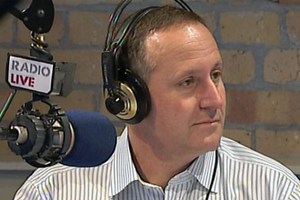
Heads up: For those interested in knowing such things, I have just accepted an offer to work with Mediaworks (parent of RadioLIVE and TV3 etc) at the RadioLIVE studios/news centre in Ponsonby, Auckland. With the end of the Rugby World Cup looming and the lead-up to the NZ General Election, it seems a stimulating time for me to climb back into the news media. Please be aware my existing disclaimers that the contents of this blog are my personal opinion and represent no-one else still apply.

– P

Confronted with information indicating we are wrong, we get ‘cranky’

The Filter Bubble — tailored information for you. But what's missing?


I listened to a brilliant lecture with Q&A on iTunes U last night by Eli Pariser, the author of The Filter Bubble. He was talking about the ideas in his book as part of a London School of Econmics Summer 2011 Public Lectures and Events. (Here’s the iTunes U URL [1 hr 20 min]. He’s also done a shorter TED talk.)

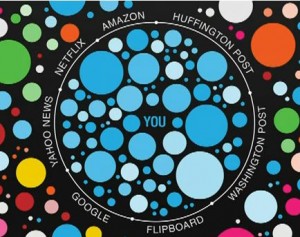
I won’t paraphrase his ideas … well, OK, in part: The internet is being filtered by commercial entities like Facebook, Google, Yahoo etc in order to make the results we see more ‘relevant’ to our interests. But the effect of that is to ‘hide’ information and viewpoints that don’t fit or support our current view of things. These businesses are deciding what information to show us — based on our browsing and searching behaviour, which they track closely — and tailoring the world we see in a way that gives us a distorted, filtered view … but we don’t know in what way it’s been angled.

He discussed the psychology … the filter effect means we’ll see more things that we’re familiar with and we agree with — and less that might invalidate our existing views (about 17.30 in the LSE lecture):

The neuro science is now good enough that we can almost pinpoint these little bursts of pleasure that we all get in our brains when we’re presented with information that confirms what we already thought was true. And conversely it’s nearly universal that when we’re presented with information that challenges what we believed, that makes us question whether we were right, we all get cranky. That’s just sort of the way it goes.

And the question is: If you could build a program that was able to give people more of those dopamine bursts per minute, more little bursts of pleasure per minute, why would you ever show them the stuff that makes them cranky? Why would you ever show them the stuff that challenges what they think and suggests that maybe we don’t all have the answers?

Given that insight, and reflecting on a conversation I saw in a comments stream here and how upset people have been at some of my own online comments elsewhere, I nodded soberly in agreement.

Yeah, I can see why someone coming along and disagreeing with, say, someone else’s expressed opinion or point of view, or laying out an argument that questioned another person’s thinking or behaviour or labeling of ‘opponents’ in harsh derogatory terms … might cause some crankiness.

That’s just human nature. How we respond to information that doesn’t merely confirm our views — that is a test of character.

– P

Here’s Pariser’s list of Ten things you can do to to pop your Filter Bubble

Birds of a feather?

** DO NOT CLICK! ** For illustration only. (source - see body copy)


Ha! I found this funny:

I googled the term ‘disvalidation‘ this morning (I know it’s not a real word, but wanted to see if it was used, you’ll see why in a later post on the Filter Bubble) … and saw a web result that, on a glance, I thought had the word ‘education’ in the URL (like, you know, my own www.empowereducation.com)

… but oops, no, it was www.fastseduction.com … a site selling tips for picking up women (I guess) and their result was mildly interesting (caution).

But what struck me was the ads — and what they say about the sort of person who intentionally visits that site. What do you think an aspiring PUA (pick up artist – retch) and someone in the market for professional ‘gambler training’ could have in common?

A risk-taker’s gene? Or a gullibility gene?

Just made me chuckle.

– P

Oh, and if you think I’m imagining the link, look (don’t click):

A question of perspective

What you see depends on where you stand.

Or, put another way:

How you look at pedestrian crossings depends a lot on whether you’re the person wanting to cross the road or the vehicle driver called to wait and let the person cross.

A couple of days ago in the context of Martyn Bradbury’s rant, I mentioned this comment-‘chilling’ threat from blogger w.p.d.s Cam Slater:

Even blogs which proudly boast little or no moderation like Cameron Slater’s WhaleOil practice other techniques for ‘chilling’ commenters who they regard as unwelcome or ‘trolls’.
A couple of months ago Cam took grave exception to a tacky, tasteless anonymous comment and in response published the commenter’s name, email address and workplace and quietly incited his ‘Army’ to harrass the guy’s employer about his foul comments — which they did, apparently. Last month I observed Cam threaten another anonymous commenter with similar exposure if he didn’t tone down his comments in these terms:

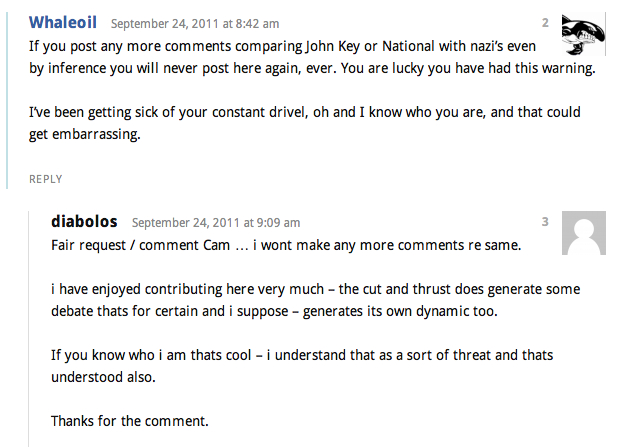
If you post any more comm​ents comparing John Key or National with nazi’s even by infer​ence you will never post here again, ever. You are lucky you have had this warning.
I’ve been get​ting sick of your constant dri​vel, oh and I know who you are, and that could get embarrassing.

Then this morning, in my post about a some people hassling a politician online, I made a very brief comment (since deleted) which implied the anonymity of one of them might not be as universal as he might suppose, and used the phrase ‘blow your cover’. I’ve been (privately) called to task on that. And fair enough.

Having (only very mildly) recently hassled Cam about his own ‘naming and shaming’ of a commenter on his blog, and his overt threat to do the same to someone else (see quote above), it could be seen as (a) questionable or (b) an act of disgraceful hypocrisy — depending on your point of view — for me to even vaguely suggest a similar threat to actually reveal the real world identity of someone else. Especially since that person evidently prefers to make his political statements and use (ahem) social media to anonymously hassle politicians on the internet (to the point of being recently banned from a Left wing site, I understand?) under a pseudonym. (Yes, I know using ‘anonymous’ and ‘under a pseudonym’ in the same sentence is redundant English. Shoot me.)

I am a long-time proponent of people using their own name on the internet and being accountable for their statements. I think there’d be far less BS to wade through if we were to stand by by our comments. See Jules Older’s Own up Dude and Seth Godin’s Put your name on it. I think we should comment in a way that makes us identifiable.

I concede there are times when a pseudonym is a useful thing. But I just wish anonymous trolls wouldn’t be such dicks. See: Potshots from behind a mask of anonymity are, by definition, cheap and Hello anonymous commenters?

Your secret is safe with me.

– P

Drunken yobos spit in MP’s face, then skite to their mates like idiot schoolboys

Just yesterday I said

“As I see it, [Trevor] Mallard cops flak from haters and nutters simply for being part of Labour’s online presence…”

Here’s a case in point, from last night — via Cameron Slater and Twitter.

How it looks to me: A pair of adolescent drunken yobos (Clint Heine and anonymous ‘inventory2‘) hassling a public figure in a bar, then skiting to their mates (Whaleoil and Cactus Kate) that they annoyed him and got him to swear at them. Big woopsy-doos.

image: junkdrawerblog.com

I think Mallard’s description of their oafish social media goading and provocation as ‘brainless shit’ is accurate — I’d add ‘malicious‘ and ‘misleading‘.

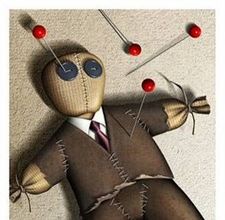
Then, this morning the fixated Cameron Slater sticks another pin in his Trevor Mallard voodoo doll, and selectively quotes only Mallard’s tweets — but that’s par for him, let me suggest. ‘I’m not a journalist’ he says, excusing his slanted ‘reporting’ [cough] remember? …

Peter, FFS, I’m not a jour­nal­ist, I’m a par­ti­san blog­ger, when will you fuck­ing under­stand that?

…  and calls Mallard ‘nasty Trevor’.

Read the interchange below in context and ask yourself who the ‘nasty’ party really was. (Hint: the dribbling, abusive trolls, in my opinion.)

What a waste of electrons. Continue reading →

Engaging, rather than demonising

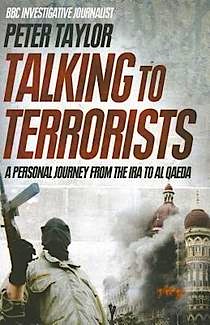
I respect and pay tribute to people whom engage with others with whom they disagree — and I try to do so myself.  I’m reading veteran BBC journo Peter Taylor’s book Talking to Terrorists. It’s very good, deeper than I expected, and insightful of the motivations of people involved in struggle. This is from the introduction, Recognising Reality…

The popular perception of terrorists and terrorism is often at variance with the reality. In combating the threat, be it from the IRA, Al Qaeda or other insurgent groups, the keystone of any government’s strategy is to demonise and marginalise the enemy, in the hope of denying it moral and political legitimacy and eroding support for its cause. Over the years I’ve seen governments’ attitudes change following their recognition that the ‘terrorists’ had a cause whose roots had to be addressed, and that a compromise had to be reached if there was to be a stop to the unending shedding of blood and haemorrhaging of human and financial resources. Recognising reality is a prerequisite of ending conflict. As I’ve found on my journey it’s also a prerequisite of reporting and analysing terrorism. The recognition of these facts did not come early for me, but gradually emerged as the result of a long process in which I engaged with some of those who were regarded as terrorists at the time.

Recommended. – P

Astonishing corruption at Murdoch’s Wall St Journal

Crikey. If this is how Murdoch’s flagship Wall St Journal operates, what’s going on in the background at Fox News?

This tale of corruption, money-channelling and ‘news’ articles used as bribes to keep the conspiracy alive is devastating. It’s from Nick Davies who exposed News International’s phone hacking and police & political corruption …

20111013-063842.jpg

Photograph: Mark Lennihan/AP via The Guadian

The Guardian found evidence that the Journal had been channelling money through European companies in order to secretly buy thousands of copies of its own paper at a knock-down rate, misleading readers and advertisers about the Journal’s true circulation.
The bizarre scheme included a formal, written contract in which the Journal persuaded one company to co-operate by agreeing to publish articles that promoted its activities, a move which led some staff to accuse the paper’s management of violating journalistic ethics and jeopardising its treasured reputation for editorial quality. …

Read the article at The Guardian

This sucks:

Senior executives in New York, including Murdoch’s right-hand man, Les Hinton, were alerted to the problems last year by an internal whistleblower and apparently chose to take no action. The whistleblower was then made redundant.

– P

Hansard can be a real bitch, eh Mr Key?

Questions for Oral Answer — Questions to Ministers, Questions to Members 4 October 2011 – Hansard

Hon Phil Goff: Is it correct that New Zealand’s credit rating with those two agencies is now the same as Spain’s—a country that National has constantly derided as being an economy in trouble?

Rt Hon JOHN KEY: I cannot confirm that. It may well be; it sounds logical. But let me quote this from Fitch Ratings: “New Zealand remains well placed amongst the world’s highly-rated sovereign credits, with its creditworthiness supported by moderate public indebtedness, fiscal prudence, and strong public institutions.” But I will say this: when Standard and Poor’s was giving a meeting in New Zealand about a month ago, what it did say was that there was about a 30 percent chance that we would be downgraded. That is what happens when one is on a negative outlook. It did go on to say, though, that if there was a change of Government, that downgrade would be much more likely.

So, it has emerged that the prime minister’s … er … let’s say paraphrase of rating agency Standard and Poor’s [alleged] response to the idea of ‘a change of Government’ wasn’t actually quite as solidly based as a casual observer might have supposed.

Here’s how Mr Key handled questions about his anyway-you-look-at-it unequivocal ‘It did go on to say …’ 4 October claim a week later at Monday’s (10 October) post-cabinet press conference …

John Key explains his Standard & Poor’s comments Oct 2011 from The Paepae on Vimeo.

This is an extract from New Zealand Prime Minister John Key’s post cabinet media briefing in Wellington 10 October 2011. Mr Key explains his earlier comments in Parliament indicating rating agency Standard & Poor’s would regard a downgrade in NZ’s credit rating as ‘much more likely’ ‘if there was a change of government’ were not based on comments from Standard & Poor’s.
S&P have since denied making any such statement. He explains that he drew his comments from an email report he received from a National Party supporter describing an ‘inference’ and thought Mr Key could ‘use’ the comments.
This video is an extract from a longer video available at: www.scoop.co.nz/stories/HL1110/S00121/audio-pms-post-cab-presser-monday-10-october-2011.htm

Not very convincing? No, I didn’t think so either. It’s been a while since I attended one of those post-cabinet media conferences at the Beehive, but it’s clear the press gallery still hunts as a pack. TV3’s Patrick Gower called it ‘a personal credibility downgrade‘ …

The big problem for Mr Key is the agency says it said no such thing.
“At no stage have we said that a rating downgrade was more likely if there were a change of Government,” the agency said in a statement today. …

Mr Key has received what’s effectively a personal credibility downgrade from a clearly unimpressed Standard and Poor’s. His actions on this one can easily be judged by that old saying in politics – explaining is losing.

It seems clear Mr Key didn’t have a firm basis for his ‘one-liner’ statement. It went beyond ‘inference’ and the resultant witch hunt for his ‘politically motivated’ informant at the meeting of economists is interesting to watch (see Audrey Young’s ‘Who wrote John Key’s mystery S&P email?‘ in today’s NZ Herald.

Time will tell whether this or the oil spill off Tauranga tests Mr Key’s political teflon coating more.

– P

Update: Here’s the text of Mr Key’s informant’s email, released by the prime minister’s office (courtesy Alex Tarrant interest.co.nz):

Hi John

I was part of a session with a range of economists yesterday morning – every year they do this session – with economists from Aus plus all the main NZ banks, and this year two from Standard and Poors, (sic) including the guy who obviously has a lot to do with the NZ grading.

Anyway, the S&P guys were very complimentary about how the NZ Govt is managing fiscally and their trust that what you say will happen happens, and your unwavering commitment to getting NZ’s balance sheet sorted for the long term.

But there was a key one-liner that I thought you could well use. S&P said that there was a 1/3 chance that NZ would get downgraded and a 2/3 change it would not, and the inference was clear that it would be the other way around if Labour were in power. They discussed the impact on interest rates if NZ got downgraded and how that would quickly impact on the home owner mortgage market, so net there is a much higher risk to NZers that they will face higher interest rates under a Labour Government.

Don’t know how you use it but they were quite serious.


A character reference for Trevor Mallard that I find more plausible

Long-serving Labour MP Trevor Mallard cops a fair bit of hateful abuse from the attack dogs in the NZ political blogosphere. He’s routinely denigrated and slandered by people with an obvious axe to grind — partisan political activists. You know the type.

When a political opponent becomes an irrational figure of hate, it starts to make the haters look crazy. (image: ehow.com)

As a point man in the Labour Party he’s obviously a target for outpourings of bile and spite … whatever the social media equivalent is of voodoo … obsessive incantations, writing and sticking pins into a wax doll.

Yeah sure, Mallard has been a knee-capper and a bovver boy … and engaged in pretty feral debate himself. I actually liked him for having a poke at the goading Tau Henare (who I think admitted he deserved it?), but yeah, OK, it wasn’t very ‘Parliamentary’. So sue him. (Oh, wait.)

As I see it, Mallard cops flak from haters and nutters simply for being part of Labour’s online presence and for having the guts to poke his oar in — sometimes controversially. He recently advanced a conspiracy theory about politics lecturer Bryce Edwards’s sponsorship for his daily political digest. Earlier this year he suggested Hawkes Bay’s answer to Machiavelli Simon Lusk and Pakuranga’s answer to Perez Hilton Cameron Slater acted as (paid) political advocates/operatives for the National Party (Brash-Banks) takeover of the dying swan melodrama formerly known as the ACT party. (Cam denies any payment.)

Trevor Mallard is out there. The blogosphere’s sad standard response: ‘Meet argument/opposition with personal abuse’ has kicked into overdrive on him. Reptilian spite and vitriol dog him as people who fancy themselves as his political ‘enemies’ — legends in their own lunch boxes, or anonymous trolls, most of them — have a crack at him. Usually the attacks are graceless, baseless, nasty and barely articulate.

Mallard, although passionate at times (isn’t that better than bland?) always seemed like a fairly well-rounded human being to me, despite being the focus of ongoing character assassination from ‘the Right’ and the fringe-dwellers.

So I nodded in agreement when I spotted this quote from Derek Cheng’s profile of outgoing National Justice minister Simon Power in the NZ Herald:

“People see a clash of parties, but they don’t see the trust between selected individuals on both sides. Each political party can carry one or two people who can talk to other parties in a very honest and straight-forward way.
“[Labour’s shadow Leader of the House] Trevor Mallard and I disagree on a lot, but he’s never broken his word to me, he’s never broken my confidence, and when I’ve dealt with him and he says Labour is going to do something, they do it.

Yeah, that’s the picture I have of Trevor Mallard too. ‘Sportsmanship and well-rounded humanity‘ I called it.

– P

Privacy? Not if you use Gmail

From Read Write Web …

Google Hands Wikileaks Volunteer’s Gmail Data to U.S. Government

Gmail users got a hefty dose of reality today when it was revealed that Google handed over one user’s private data to the U.S. government, who requested it without a search warrant.

The contacts list and IP address data of Jacob Appelbaum, a WikiLeaks volunteer and developer for Tor was given to the U.S. government after they requested it using a secret court order enabled by a controversial 1986 law called the Electronic Communications Privacy Act, according to the Wall Street Journal. The law allows the government to demand information from ISPs not only without a warrant, but without ever notifying the user. …

Wow. Worth knowing, huh? Read on here.

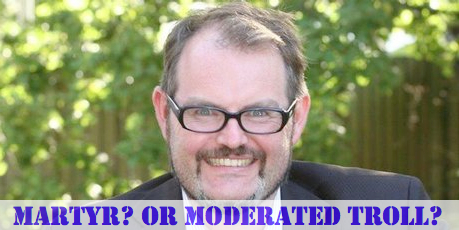
Bradbury: Martyr or moderated troll?

There’s been a reflexive kerfuffle about hard-left attack dog Martyn Bradbury being told his services will no longer be required as a ‘political commentator’ by NZ public radio after he read a billious scripted rant on a recent ‘discussion panel’.

Martyn Bradbury got a slap — but what for exactly? (image APN)

Let me be clear about my own opinion of Martyn: I think he is a sloganeering polemicist. He is also, in my personal opinion, a devious smear artist who hysterically espouses extraordinary anti-democratic ‘positions’, [see On a collision course] and wages ‘war’ on people he regards as ‘enemies’. In my observation he seeks to denigrate and libel his political opposites (of which I am not one) while dressing in left wing, liberal, culturally appropriate ‘clothing’ as if he were a politically-switched on version of comic Te Radar (he wishes!)

Bradbury was told to sling his hook by National Radio after he’d made a dick of himself (IMO) and compromised the Jim Mora show’s already tenuous hold on a semblance of political neutrality following Mad Butcher Peter Leitch’s John Key fan club president speech during the butcher’s Eight months to Mars appearance on the show.

So after Thursday’s (possibly defamatory?) rant aimed at John Key and alleging broad corruption, Bradbury was told he wouldn’t be invited back … and RNZ producers were told not to invite him back. [* see update below]

Cue the wailing and cries of ‘bias!’, ‘censorship!’, ‘corruption!’ … and calls for solidarity … with the resentful attention-seeking boomer basher launched high on virtual shoulders. Yes, outrage, then malaise amongst certain of the blogosphere and twitterverse. But, hang on, let’s look at it…

Martyrdom or moderation?

Moderation of comment streams on blogs is common. Two of the blogs which have sprung to Martyr’s defence The Standard and Red Alert, as well as those that (ahem) haven’t like Kiwiblog routinely practise moderation of their comments. Some of the new media paragons of free expression even implement elaborate ‘demerit’ systems and stand down periods, and outright bans for commenters whose words/behaviour they deem to have ‘crossed the line’.

Don’t they?

Even blogs which proudly boast little or no moderation like Cameron Slater’s WhaleOil practice other techniques for ‘chilling’ commenters who they regard as unwelcome or ‘trolls’. A couple of months ago Cam took grave exception to a tacky, tasteless anonymous comment and in response published the commenter’s name, email address and workplace and quietly incited his ‘Army’ to harrass the guy’s employer about his foul comments — which they did, apparently. Last month I observed Cam threaten another anonymous commenter with similar exposure if he didn’t tone down his comments in these terms:

If you post any more comm​ents comparing John Key or National with nazi’s even by infer​ence you will never post here again, ever. You are lucky you have had this warning.
I’ve been get​ting sick of your constant dri​vel, oh and I know who you are, and that could get embarrassing.

(Intriguing that it’s John Key that gets defended with such zeal, huh?)

On this blog, The Paepae, I delete spam and comments that could be defamatory or just seem like spiteful attacks without basis. Discussing it with other less obscure 😉 bloggers, I think that’s a pretty common standard.

Martyn Bradbury acted like a troll on Jim Mora’s show — or as others have said, like a very poorly behaved house guest, disrespectful of the host. He wore out his welcome.

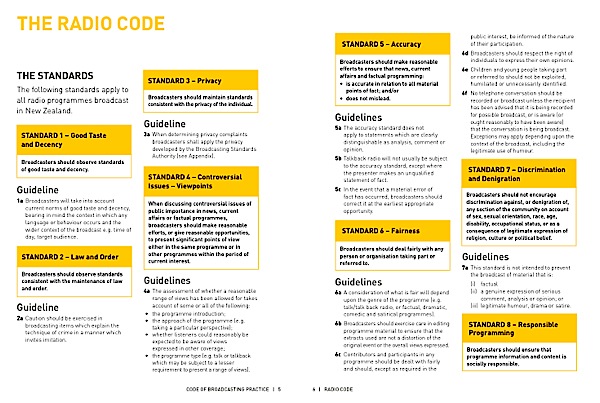
It is natural, fit and proper for a radio producer to assess a guest’s performance and make a decision about future suitability. I arranged thousands of interviews, guest appearances, correspondents and commentators on the radio in my time with the Paul Holmes Breakfast. When assessing a guest’s performance etc, one of the factors we had to balance (no pun) was the Broadcasting Standards Authority codes of practice.

Some got invited back. Others didn’t. So what?

– P

Click to download a pdf of the Code of Broadcasting Practice


* UPDATE: This, from the 3News.co.nz website, clarifies RNZ’s position …

A spokesperson for Radio New Zealand released this statement to 3 News this afternoon [Monday]
.
“Mr Bradbury’s invitation to take part in The Panel discussion segment was withdrawn because his personal comments about the Prime Minister were deemed to be in breach of Radio New Zealand’s editorial requirements for fairness and balance. One of his comments was regarded as being potentially defamatory.
“Mr Bradbury’s comments were inconsistent with information he had provided to programme producers before going on air.
“Mr Bradbury later apologised to the programme’s executive producer. It was made clear to him that while his invitation to appear as an occasional guest on The Panel was being withdrawn, it was not a ‘lifelong ban’ and it did not apply to other Radio New Zealand programmes.”

Storm the barricades, brothers and sisters!

Anonymous painting of The Storming of the Bastille

The zeal of advocacy practiced by some in ‘new media’ is striking at times for an apparent lack of fair-mindedness. In some cases, it seems pretty clear an overt political campaign resembling trench warfare is being run under the guise of ‘news filtering’ or ‘commentary’ or blogging, among other things. Of course, mainstream media isn’t universally fair either. Advancing that argument (which I don’t) would truly be a hiding to nothing.

Further, some bloggers who themselves rely intensely on mainstream media (or parasitically, as discussed) appear to hold a giddily inflated view of the role of social media in ‘leading’ news these days. They point to examples where MSM journalists pick up on ‘stories’ or developments some of which emerge via social media … as if that is somehow akin to heralding the extinction of the dinosaurs.

A news organisation reporting what someone wrote on their Facebook wall doesn’t readily fit into my (utopian?) definition of news … I guess unless it’s Sarah Palin saying, ‘I still haven’t decided whether or not to run for President. Send me money to help me make up my mind.’ A tweet, even less so. (See ‘Is eavesdropping on Twitter really news?) But there are exceptions there, too — think Arab Spring.

Journos have always been like beachcombers, looking for leads wherever they might find them. That’s not new.

Others see the ‘battle’ between new media and MSM in generational terms — baby boomers in the ‘old’ media blocking the ambitions of Gen X & Y aspirants — grey-heads acting as gatekeepers, keeping the next generation ‘out of the game’ … or by not shuffling off to retirement swiftly enough.

I see it differently. (Surprise!) Taking those points in reverse order …

Those already working in the mainstream media are ‘in place’ because of earlier decisions they made to enter that industry, perhaps gaining training, professional qualifications and experience on the way, and ‘earning their stripes’. As I tried to say in my post New media – it’s not about being impartial I think the distinctions between ‘new media’ and whatever you want to call what existed before, are transitory. All-encompassing MEDIA will roll over and absorb it all. The divisions and barricades on which people in both ‘camps’ are spilling blood (metaphorically) will be a fly-spot on the wallpaper that is the history of civilization.

The internet has simultaneously changed everything … and absolutely nothing about human nature.

Just like the English language has, MEDIA will adopt, adapt, steal, invent, incorporate — absorb what it wants — from ‘new media’ and step up to the challenge of being relevant to today’s audience … with a few provisos from legacy, as I indicated:

The MSM will welcome or include passionate expression by ‘reasonable’ people [… ] but concerns about audience reaction to those whose personas are written off as monochrome, sometimes deceptive […] militant attack dogs may see them have to wait a bit longer.

That’s enough with the raving, thanks Martyn

As if to prove that very point, news emerged yesterday that left wing attack dog Martyn Bradbury has been told he’s no longer welcome as a guest commentator on Radio New Zealand. That followed an extended partisan rant last week about Prime Minister John Key’s ill-mannered reaction to an attempted jumper at Parliament and Bradbury’s ‘suggestion’ that Key’s recent Prime Minister’s Hour slot on Radio LIVE was somehow corruptly linked to a time payment scheme for radio spectrum levies.

Martyn was speaking on Jim Mora’s radio show segment The Panel and his haranguing soapbox-style expression of ‘thoughts’ (reading one of his own blog posts! Boooo, hiss) were, apparently, deemed to have breached RNZ’s fairness and balance guidelines. Another factor was his bombastic refusal to pause for breath in his rant when the host, Jim Mora, tried to interject a comment … you know, as if it was, like, gee, a panel discussion?

Yes, harumph, that’s the very same show that Mad Butcher Peter Leitch used as a platform for his extraordinary political and personal endorsement of the same John Key. Interesting, huh? Will Martyn seek to change his name to ‘Martyr‘?

I don’t speak for Radio NZ (nor anyone else, actually) so I can’t be definitive about this, but it seems to me Martyn’s mistake was exactly what I recently warned another blogger about: indulging a ‘narcissistic ‘the-rules-don’t-apply-to-me’ loose cannon persona‘. My opinion: It’s just not how you get to be in a position of influence in the media. (Just sayin’.)

That’s why they call it progress

But back to the main point, in the same way that ‘pop music’ has moved from Beethoven & Mozart to flapper music to big band and marching band music to Broadway musicals to Pink Floyd, The Beatles, Blondie & Queen, Mariah & Britney to Lady Gaga & Katy Perry … as the audience composition changed … so will MSM. That’s evolution not revolution, despite the ‘Generation gap’ rhetoric, arguments and hopes to the contrary.

I’ve commented before about the dichotomy of bloggers pouring scorn on MSM, while dying to get a MSM gig … seeking mass media exposure. Some gain it, like David Farrar, because they tailor their message and style to the platform. Like most of us, Farrar is more than a blogger.

Update: I see David has shared the ‘approach’ (formula for success?) he takes to his own appearance the Jim Mora show, which reads like they could be straight from my ‘fair-minded and balanced’ hymnbook:

  • The show is a discussion, not a rant. Listeners are expecting a three way or four way (when we interview someone) discussion on topics.
  • I never prepare notes in advance. I will think about topics in my head but always just speak unscripted
  • I try to be relatively balanced. I’ve often been critical of the Government on a specific issue on the show. Of course as someone with centre-right views, this reflects what I say.
  • I try not to be too political. Many of the items I choose to talk about are not political. I talk about travel a lot! …

Read the rest at David Farrar’s blog. Of course he’s criticised from the right and the left a little like this:

Some don’t bother with social media except as an adjunct to their professional political advocacy, spin doctor, opinion polling/research, media strategist (cough) jobs.

Martyn Bradbury’s setback this week is instructive. Of course Radio NZ will be cast by some on the Left as the government’s poodle etc. yada yada yada.

Predictable teeth gnashing and hand wringing about ‘censorship’ will ensue. Who cares? Martyn Bradbury acted like a dick IMO, ranting and recycling his inflammatory blog ravings. He misjudged his MSM audience and the needs of the Radio NZ platform — and he got feedback about that: ‘Don’t bother coming back’

Hey, it’s RNZ’s show, their sensitivities, their balancing act, their big picture … and their rules.

– P

Social (new) media is a universally good thing … erm…

The Internet in Society: Empowering or Censoring Citizens?