Of goose and ganders. ACT on Campus referred to police for breaching the law

I was idly checking the 2011 election results on the Electorial Commission’s website tonight, to doublecheck my basis for recently referring to fringe political party ACT as the one-point-one percenters … they got 1.07% of the vote … and look:

Referral to the Police 2 February 2012

The Electoral Commission has referred the following matter to the Police:

ACT on Campus ‘Not your typical party’ flyer, baseball cap and t-shirt.

It is the Electoral Commission’s view that the publication of the ACT on Campus flyer, baseball cap and t-shirts constitutes a breach of sections 204F and 204H of the Electoral Act 1993 because the items are election advertisements that did not contain a valid promoter statement and were not authorised in writing by the ACT party secretary.

As this matter is now with the Police, the Electoral Commission will not be commenting further.

How strange (er, not!) that the fixated right wing attack bloggers who so studiously and vociferously whack their perceived enemies on the ‘left’ for such misdemeanors and infractions have been … silent. Unless I missed something other than Homepaddock‘s mention discovered later. (That’s not to say I classify him that way!)

Those others just probably just missed the news, huh?

– P
Background of the Waitangi Tribunal

Establishment of the Tribunal
There is a long history in New Zealand of Māori protest over instances where the Treaty of Waitangi was not observed. The Waitangi Tribunal was set up in 1975 at a time when protests about unresolved Treaty grievances were growing and, in some instances, taking place outside the law. By establishing the Tribunal, Parliament provided a legal process by which Māori Treaty claims could be investigated. The Waitangi Tribunal inquiry process contributes to the resolution of Treaty claims and, in that way, to the reconciliation of outstanding issues between Māori and Pākehā.

The Tribunal’s Governing Legislation
The Waitangi Tribunal was established by an Act of Parliament, the Treaty of Waitangi Act 1975. While that Act is the main statute governing the Tribunal, there are other statutes that regulate or affect how it works, including the Commissions of Inquiry Act 1908, the Treaty of Waitangi (State Enterprises) Act 1988, and the various statutes that give effect to Treaty claim settlements. Continue reading →

Nelson Mandela on reconciliation

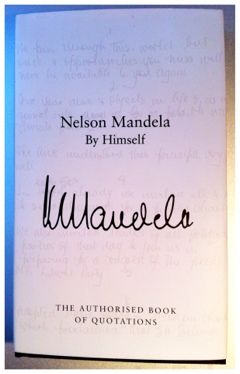
20120206-121925.jpg

One of my very generous sisters-in-law gave me a volume of Nelson Mandela quotations for Christmas. It’s astonishing how much wisdom about the big issues of life he expressed over the years — and with such eloquence and elegance of thought.

Thinking about the decades of protest at Waitangi, and the enormous progress towards reconciliation we’ve made in New Zealand (still some way to go) I wondered what a freedom fighter who overthrew a government and became a democratic president might say … and found this:

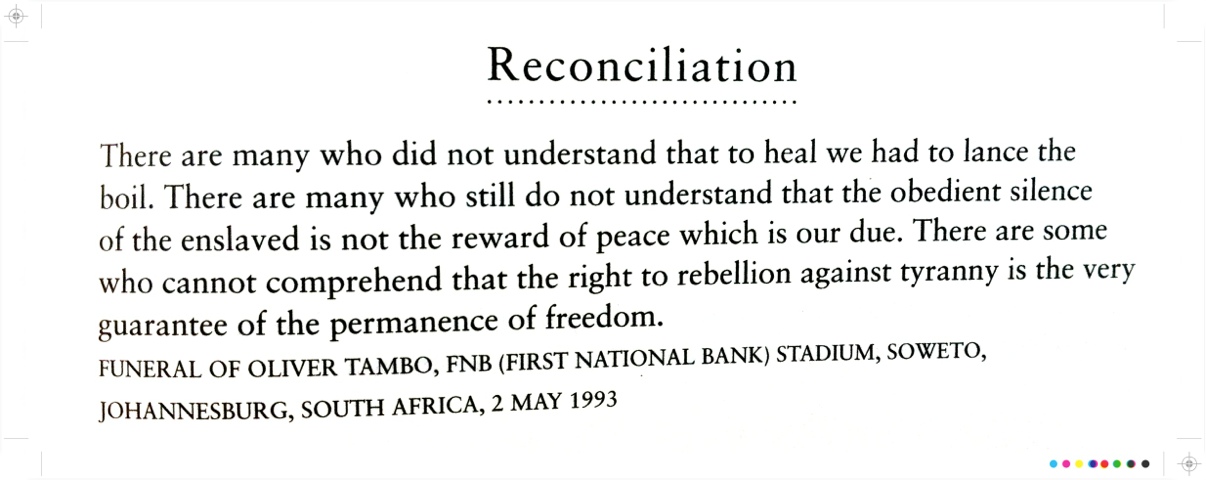
20120206-122155.jpg

Reconciliation

There are many who did not understand that to heal we had to lance the boil. There are many who still do not understand that the obedient silence of the enslaved is not the reward of peace which is our due. There are some who cannot comprehend that the right to rebellion against tyranny is the very guarantee of the permanence of freedom.

Protest, or the ‘right to rebellion’ against what you judge to be tyranny is essential to freedom. And yet we have people in this country trying, still trying, to suppress protest, bleating about pandering to ‘radicals’.

There’s another quote from National Reconciliation Day (what a concept!) 16 December 1995:

Reconciliation means working together to correct the legacy of past injustice.

It’s up to each of us New Zealanders to decide whether we’re part of the solution … or, by impatient, intolerant vituperation of those with whom we disagree, we prove to be part of the problem.

It’s not easy, but, as Mandela told Parliament in Cape Town 25 February 1999, it’s vital to press through ‘difficult negotiations’.

The quest for reconciliation was the spur that gave life to our difficult negotiations process and the agreements that emerged from it.

Some of those from all political corners in this country know exactly what he means. And to their credit, the leaders among them pursued just Waitangi Treaty settlements from exactly that drive — overruling, if not ignoring the jeering cavils and complaints of those who tried (and still try) to hold them back with hateful objections … and insults.

– P

Is this what we want?

New Zealand’s system of government – an overview

(via elections.org.nz)

New Zealand is a democratic country in which the members of parliament (MPs) are chosen in free and fair elections. Citizens and permanent residents who are aged 18 years and over are required to enrol to vote. Voting is not compulsory, but turnout is high by international standards (although trending lower).

New Zealand has a single chamber of parliament which consists of the House of Representatives, which generally has 120 MPs, and the Governor-General (who does not personally attend the house). The house is elected for a maximum three-year term using the mixed member proportional (MMP) system. Every New Zealand citizen who is enrolled as an elector is eligible to be a candidate for election as an MP.

The government is accountable to parliament for its actions and policies. So ministers are answerable to parliament for their own actions and policies and for the actions and policies of the departments and state agencies for which they are responsible. Most ministers are members of cabinet, which is the main decision-making body of the government. Much of parliament’s scrutiny role is carried out by select committees.

New Zealand has an unwritten constitution and is a constitutional monarchy. The Queen of New Zealand, Queen Elizabeth II, is the Head of State. The Queen’s representative in this country is the Governor-General who has all the powers of the Queen in relation to New Zealand. Although an integral part of the process of government, the Queen and the Governor-General remain politically neutral and do not get involved in the political contest. The Governor-General does play an important constitutional role in the calling of elections, the life of Parliament, and the formation of a government.

New Zealand also has sub-national elected government bodies including territorial local authorities, district health boards, and school boards of trustees.

Really?

– P

It takes a crisis … Waitangi and its place in our constitution

Radio NZ News this Waitangi Day morning …

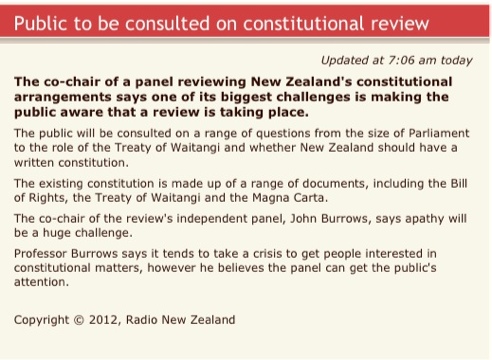
20120206-084420.jpg

The co-chair of a panel reviewing New Zealand’s constitutional arrangements says one of its biggest challenges is making the public aware that a review is taking place.
The public will be consulted on a range of questions from the size of Parliament to the role of the Treaty of Waitangi and whether New Zealand should have a written constitution.
The existing constitution is made up of a range of documents, including the Bill of Rights, the Treaty of Waitangi and the Magna Carta.
The co-chair of the review’s independent panel, John Burrows, says apathy will be a huge challenge.
Professor Burrows says it tends to take a crisis to get people interested in constitutional matters, however he believes the panel can get the public’s attention.

What a statement! (it takes a crisis)

This is the constitutional review Winston Peters referred to in alarmist tones at his Kelston campaign speech last year. Personally, I think it’s a good idea to have a review, to korero and seek reconciliation.

Maintaining a position of ‘silence’ on important matters is infantile —akin to fingers in the ears ‘la-la-la-I-can’t-hear-you’.

These issues, our constitutional ‘arrangements’ are the test of our nationhood, and refusal to engage in the discussion/argument because you might ‘lose’,… or labeling those who disagree with you as greedy or corrupt ‘scum’ as some do, demonstrates immaturity greatly at odds with the great statesmen of our nation — Maori or Pakeha (or both).

History is written by the victors, some say, but injustice buried is never truly settled. Consider South Africa’s Truth and Reconciliation Commission and its mission.

Expose the truth, acknowledge past misdeeds, redress where possiblethen we can ‘move on’.

– P

The Treaty of Waitangi and its principles

In the late 1830s, there were approximately 125,000 Māori in New Zealand and about 2000 settlers. More immigrants were arriving all the time though, and Captain William Hobson was sent to act for the British Crown in the negotiation of a treaty between the Crown and Māori. The Colonial Secretary, Lord Normanby, instructed Hobson that:

‘All dealings with the Aborigines for their Lands must be conducted on the same principles of sincerity, justice, and good faith as must govern your transactions with them for the recognition of Her Majesty’s Sovereignty in the Islands. Nor is this all. They must not be permitted to enter into any Contracts in which they might be the ignorant and unintentional authors of injuries to themselves. You will not, for example, purchase from them any Territory the retention of which by them would be essential, or highly conducive, to their own comfort, safety or subsistence. The acquisition of Land by the Crown for the future Settlement of British Subjects must be confined to such Districts as the Natives can alienate without distress or serious inconvenience to themselves. To secure the observance of this rule will be one of the first duties of their official protector.’

On 6 February 1840, the Treaty of Waitangi was signed at Waitangi in the Bay of Islands by Hobson, several English residents, and approximately 45 Māori rangatira, Hone Heke being the first. The Māori text of the Treaty was then taken around Northland to obtain additional Māori signatures and copies were sent around the rest of the country for signing, but the English text was signed only at Waikato Heads and at Manukau by 39 rangatira. By the end of that year, over 500 Māori had signed the Treaty. Of those 500, 13 were women.

Principles of the Treaty

Under the Treaty of Waitangi Act 1975, the Waitangi Tribunal has exclusive authority to determine the meaning and effect of the Treaty as it is embodied in the two texts (Māori and English) and to decide issues raised by the difference between them.

The term ‘Waitangi Tribunal’ is used to refer both to the total membership and to the individual Tribunals that inquire into claims by Māori relating to actions or omissions of the Crown that may breach the principles of the Treaty. It is through its reports that the Tribunal provides its account of the Treaty principles.

In the appendix to the Rangahaua Whanui National Overview report, Dr Janine Hayward discussed the emergence of four reconciling Treaty principles, namely the principle of active protection, the tribal right to self-regulation, the right of redress for past breaches, and the duty to consult. The recognition and adherence to these principles ensure the ‘active protection’ of Māori language and culture.

Waitangi Trubunal

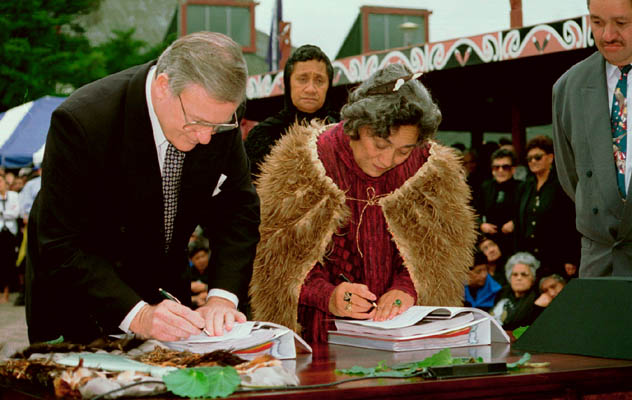
"Prime Minister Jim Bolger and Maori Queen Dame Te Atairangi Kaahu sign the historic (Tainui) agreement at Turangawaewae marae in Ngaruawahia" 1995 (Pic: NZ Herald)

The Treaty of Waitangi spoke of all relationships between New Zealanders, Mr Bolger said, “and we devalue it if we see it solely in terms of land claims, as many Pakehas sometimes do”. … “I see Aotearoa as a great waka,” Mr Bolger said. “It is a waka that needs many paddlers – some of them are Maori, some non-Maori. Some of them came here long ago, some in recent times.” — quoted in NZ Herald Waitangi Day 1992.


Blame the Blackberry

From a very-well-worth-reading Reuters article about the News Corp/News International ‘clean up’ over phone-hacking:

James [Murdoch] has consistently said that he did not know all the facts when he approved the [£700k] payment [to a hacking victim, soccer union boss Gordon Taylor] despite the revelation by the MSC in December of an email trail that would have alerted him to the scale of the problem, had he read it. His defence was that he likely read the email on his BlackBerry, as he received it on a Saturday, and did not scroll down to read all of the correspondence.

Plausible? Hmm. Yup. Likely? …

– P

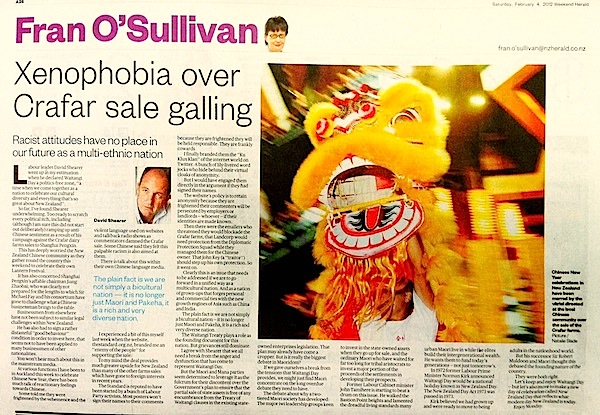
Hollaback girl Fran O’Sullivan

I generally like business writer Fran O’Sullivan’s work, which can be wide-ranging and interesting and often evinces a robust, seen-it-all-before, how-stupid-do-they-think-we-are? tone. Fran doesn’t often mince words (except for when she does) and she gets points in my book for taking a position, and saying what she thinks — or how the landscape looks from where she stands.

Also, I think if we were to draw a line, I would be on the same side as Fran with respect to our pretty complete condemnation of racism and xenophobia as a policy-driver. There just have to be better reasons than irrational dislike or fear of ‘the different’ behind our decision-making.

It’s nice that Fran’s employer, the NZ Herald newspaper apparently gives her latitude to write about whatever febrile thought is wafting through her brain at the time (a bit like a blog) rather than constraining herself to mere ‘business reporting’ (yawn). If business/money/envy stuff, mergers/acquisitions, executive promotions/demotions — and, more lately, receiverships, liquidations and fraud cases — start to bore her, from the look of it, Fran can start a Best.Sandwich.Ever lifestyle slot and the Herald will publish any damn thing she writes.

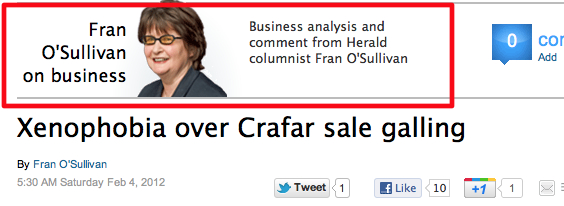
Out with the old! (click)

That hairy old positioning statement ‘Business analysis and comment from Herald columnist Fran O’Sullivan’ can be phased out. Why should she be bound by that old tagline? Pfft!

While I don’t make a habit of jumping into other people’s arguments (not much) I think Fran should be encouraged to bring her amply demonstrated journalism skills to the party when she deigns to attempt to whack someone. She should not stoop to what looks to me like hollow invective and sloppy ‘logic’, thickening her (ahem) reporting with hearsay and others’ talking points laced with sly malice. Unless I’m missing something.

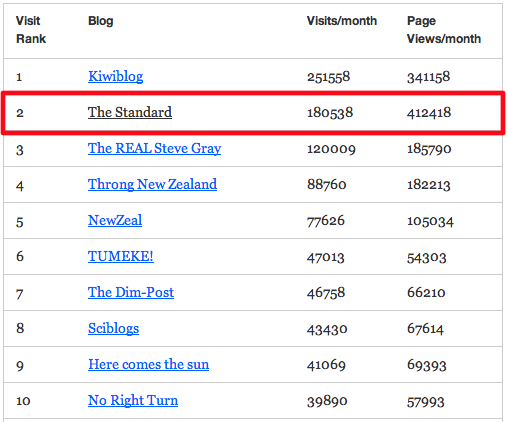
Judging by a brief interlude in her latest breathless epistle, Fran has apparently been criticized (quelle horreur) by bloggers and, worse, commenters on the second- or third-most visited blog in New Zealand (yeah, right) left wing organ The Standard.

Fran O’Sullivan she-no-likey

Fran can dish it out, sure, but can Fran take it? Weeeell, it doesn’t look like it, judging by today’s effort: Continue reading →

Justifying the dodgy

Mitt Romney seems to be indulging in the “I hit him first but it wuz self defence because I could see he was gunna hit me” justification I expect of a six year old.

After reportedly outspending Gingrich five-to-one with ads that were overwhelmingly negative, and explaining his philosophy as “when you’re attacked you’ve got to respond” the Massachusetts Mormon multi-millionaire is already predicting things will get HOT — and characterizing President Obama’s re-election campaign as well-funded (ahem) and negative

Asked about the negativity of the Republican race following a new report that showed that 92 percent of all of the campaign ads that ran in the Sunshine State in the week leading up to the Florida primary were attack spots, Romney said on “Good Morning America” that the fight was preparing him for what’s to come in the general election.
“What you’re seeing from speaker Gingrich is just a precursor of what you’ll see from President Obama, and in some respects, perhaps what we’re getting inoculates us, or at least prepares us, for what will come down the road,” he said. “There’s no question that Barack Obama’s billion-dollar machine will organize the most vitriolic, spiteful campaign in American history, and we’re going to have to be ready for that.”

Politico

Even allowing for Romney’s on-going fund-raising efforts, justifying dodgy tactics on the basis that you anticipate dodgy tactics from your opponents is the kind of paranoia fearful thinking that I was referring to here in Be careful what you believe:

It seems to me from what Cameron [Slater] and I discussed, that Right Wing spin doctors and bloggers/activists/schemers like him (and only a handful of others – in NZ anyway) have convinced themselves that their Left Wing ‘opponents’ are waging a dirty, unprincipled propaganda war and will stoop to virtually any sleazy strategy to gain influence or advantage. So strongly do they, as a group, hold this belief that they (the Right-wing cabal) feel they are therefore completely justified in waging a dirty, unprincipled propaganda war and to stoop to virtually any sleazy strategy to gain influence or advantage. I bet some on ‘the Left’ think exactly the same way. (Trevor Mallard, I’m looking at you. And you Martyn Bradbury.)
It’s very George W Bush ‘Bush doctrine‘ (justifying US first strikes as ‘preventive war’) … attacking ‘the enemy’ to beat them to the punch. ‘Weapons of Mass Destruction’. Macho bullshit.

Romney is justifying his campaign’s carpet-bombing of Gingrinch by referring to a possible future Obama campaign as “the most vitriolic, spiteful campaign in American history” — before it’s even happened. Trying to paint Romney as the ‘virtuous’ one, despite drowning Florida in attack ads. That’s hyperbole. To put it mildly.

– P

Leonard Cohen’s new album

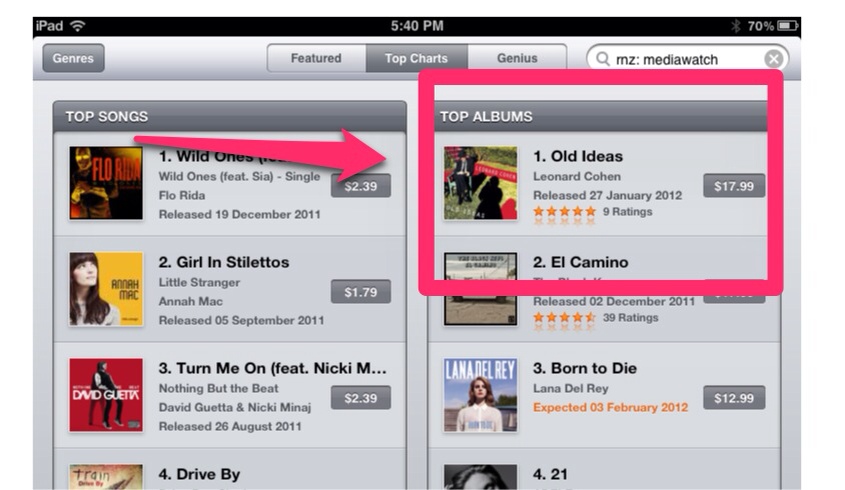
Yup, I’m a fan (and a fashion victim?) and, of course, immediately bought Leonard Cohen’s new album Old Ideas. I’d been waiting, as noted. It’s good.

I notice today it is #1 on iTunes.

That’s remarkable, given his longevity and the time in the wilderness and the shallow ‘music to slash your wrists by’ blurb.

There’s quite a good (4.5 out of 5) review in today’s NZ Herald from Graham Reid here. An extract:

Such lyrical refraction and shifting perspectives (on life and death as much as relationships) are what makes Cohen such a rare voice and lyricist. Old ideas, yes. But also the universals: love, forgiveness, the pain of life and the mystery of death.
Leonard Cohen remains a convincing witness to all these things, a reassuring voice and a firm and warm guiding hand.

As I have said before, this wise, humble, Canadian poet is one of my inspirations. I wish I approached his eloquence. He is an acquired taste, yes, and one I recommend you sample for yourself, if you haven’t. His multi-layered lyricism and, in a surprising way, his passion, will grow on you.

– P

Shit journalists say…

I recognize some of these!

via stuff journalists like (not Fairfax stuff)

The “We’ll do it live!” meme is, of course, Bill O’Reilly’s contribution to the planet.

– P

Matthew Hooton and the exquisite agony of being a paid shill

I’ve referred to spin doctor Matthew Hooton before — I positively delight in the shabby transparency of his gums-for-hire faux agitprop and the way he marshals an argument. He’s almost always accessible, usually very much in control of himself, except when overtaken by passion or appetite of some sort, and well, I find him just flat-out entertaining.

You may recall I referred to and posted a brief clip of his pre-election damnation of Green Party leader Russel Norman as [allegedly] a ‘confirmed Marxist Leninist’ who had (according to Matthew) ‘infiltrated’ the Green Party to make it appear mainstream while subverting it to socialist purposes (or gasp, to those of (communist?) Greenpeace global HQ!) I still believe he was being satirical. Surely.

Before waxing lyrical on politics yesterday earlier this week in his ‘commentator from the right’ gig at Radio NZ’s Nine to Noon show Matthew was pointedly asked at the outset to declare a conflict — his commercial connection — “I’m working with…” — (as a PR/’government relations’ hack? It’s not stated) to the Michael Fay led consortium seeking to overturn the government’s approval of a Chinese bid to buy 16 dairy farms formerly owned by the massively indebted Crafar family, now owned by their mortgagees.

Awkward. Here one of the National government’s chief apologists and demonizer of the left was, oops, publicly disagreeing with how Team Joyce had handled this sensitive matter and, double oops, finding merit in Labour’s position (if you can call it that).


Mp3 file here at www.radionz.co.nz

It’s worth listening — if nothing else, for sheer entertainment value as cross-footed Matthew finds himself constrained from his normal effusive denigration of the left by his, um, …other duties.

But let’s not make too big a deal of it. I enjoy Matthew’s performances and he’s good at what he does. And perhaps I’ve got it all wrong. Perhaps with the election in the bag, Matthew feels he can dial back the venom against the government’s opponents and get back to the schmoozing he does so well. (His water carrier vitriol against anyone who dares criticize — read ‘expose’ — Key/Joyce apparent governmental duplicity* not withstanding.)

Blunder? Or insight?

Hilarious. – P

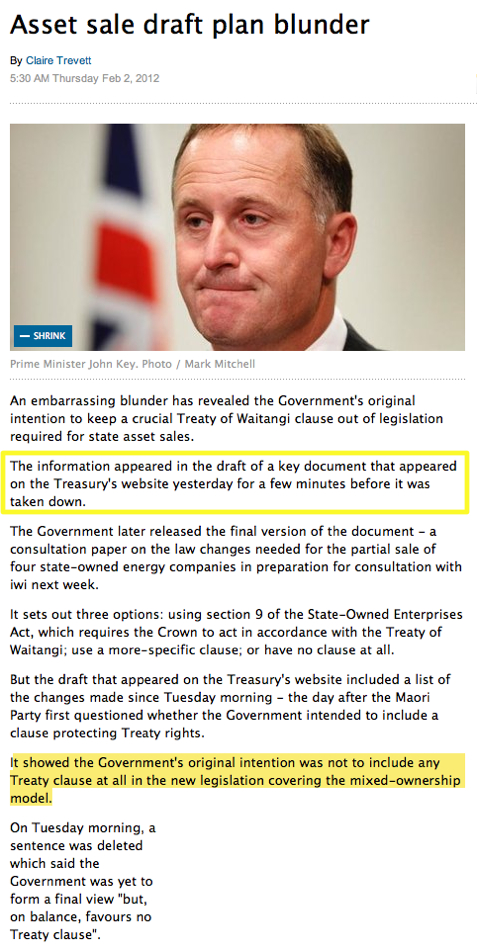
UPDATE: * Like this, for instance? Highlighted by Claire Trevett at the NZ Herald.

Media neutrality vs being truthful

We’ve talked before about my distinction (not just mine!) between being ‘impartial‘ (or big O objective) versus being FAIR — which I (naively?) primarily define as telling the truth.

Some partisans (who shall remain charitably nameless lest we upset their finely-balanced narcotic calm) seem to me to frequently stoop to spinning half-truths or outright lies — bundled with vitriol, abuse and hypocritical ravings against the ‘other side’, calling them ‘nasty’ while being the epitome of an unpleasant untruthful antagonist.

It’s natural to be more sensitive to the faults of those on one’s ‘sh*t list’, but even so, it’s hard to properly capture the dismay I personally experience when someone whose analysis can at times exude rigour lets their team loyalty cause them to use unworthy agitprop tactics like smushing the facts. Too bad.

Here’s a comment I appreciate on the issue of accuracy from US broadcaster Rachel Maddow … part of an excellent profile on her I read in The Guardian last year Rachel Maddow: ‘I’m definitely not an autocutie’

“I think a lot of people of my generation are discomfited by the assertion of neutrality in the mainstream media, this idea that they’re the voice of God. I think it’s just honest to say, yes, you know where I’m coming from but you can fact-check anything I say.”

Rachel Maddow on media ’neutrality’ in The Guardian April 2011

And that, as I have said before, is where I come from too. Sure, I may have some bugbears (or bees in my bonnet?) but nothing justifies publishing non-facts in the guise of facts, or pretending to ‘break news’ when the (ahem) ‘reporter’ is, in fact, a political actor or party team player.

Re-kindling some latin: Caveat lector — Let the reader beware.

– P

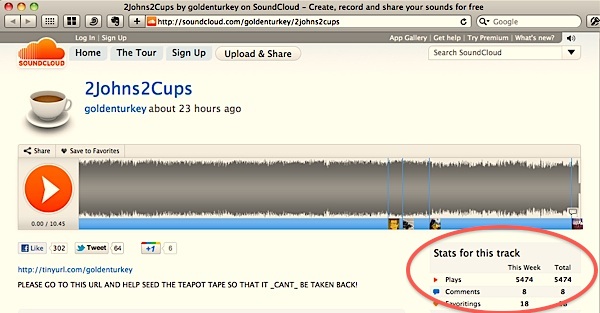
As predicted, tea pot tapes released

I predicted here and elsewhere that the recording of the now infamous election campaign ‘cup of tea‘ between ACT Epsom candidate John Banks and National Party leader John Key or a transcript would be released … I called that “inevitable“.

Viz, yesterday:

The recording at soundcloud.com (click)

The recording is now available at multiple locations. This ‘cleaned up audio’ version has had five and a half thousand ‘plays’ in less that 24 hours, and, as I write this, a different copy has had about 22,000 plays at YouTube demonstrating considerable public interest, I suggest. (See my post ‘public interest’ vs ‘the issues that matter’).

– P

This is just how I see it too

It’s hard to say I told you so without sounding like a dork. But this is how I see it too. Especially about design really mattering. Following on the heels of Apple’s enormous success …

Watching Apple Win the World — John Gruber at Daring Fireball 26/01/12

David Heinemeier Hansson, on the satisfaction of being a long-time Mac user:

Macs were (and are) just better. Not just because they were better built or put together, but because Apple was a better company. A braver company. A company that stood for higher ideals. When compared to the empire of Microsoft and the Dells, Sonys of the time, it simply felt like they were more right.

For years, when Apple was down, they were held up as proof that making the best products didn’t matter. The Mac is better than Windows and look what happened was the refrain. You still hear it today, anytime Apple slips even a notch. Look no further than yesterday’s claim chowder of Henry Blodget. What’s satisfying about Apple’s current success is that it’s proof that you can succeed wildly by focusing first and foremost on making great products. That design does matter.

(Via Daring Fireball)