Wow. That’s intriguing …

One of the more formative books (‘most formative? Hmpf, doesn’t sound right) I’ve ever read was an eye-opening (and subsequently controversial) tome called The Origins of English Individualism: the family, property and social transition by Henry McFarlane …

The Origins of English Individualism is about the nature of English society during the five centuries leading up to the Industrial Revolution, and the crucial differences between England and other European nations. Drawing upon detailed studies of English parishes and a growing number of other intensive local studies, as well as diaries, legal treatises and contemporary foreign sources, the author examines the framework of change in England. He suggests that there has been a basic misinterpretation of English history and that this has considerable implications both for our understanding of modern British and American society, and for current theories concerning the preconditions of industrialization. — Google books

I had the luxury of being taught a NZ History university course at a time of great revisionism and by a triumvirate of historians. Miles Fairburn’s ideas about the ‘atomization’ of early NZ settler society in the late 1800s, were seen by some of my fellow students as less glamorous than Jamie Belich’s ground-breaking The New Zealand Wars revisions of the Victorian account, and what Jock Philips was expounding about the role of World Wars in defining NZ as a nation. But to me his ideas were like a fire in the undergrowth, just as powerful in a different way.

pic: www.christianthought.info - click

In combination, Fairburn’s and McFarlane’s ideas led me to see how individual and group values can reproduce themselves (‘memes’ we call that now, well, kinda) … and how they can lead to sometimes unpredictable social consequences.

Dovetailing that in with my observation of techniques of political persuasion, religious ‘revival’ and the charismatic movement, marketing, and the use of appeal to ‘self-interest’ vs ‘community’ from John A Lee to Rob Muldoon to Margaret Thatcher to Roger Douglas … and I began to see snatches of a pattern in the chaos. Like fractals. (right)

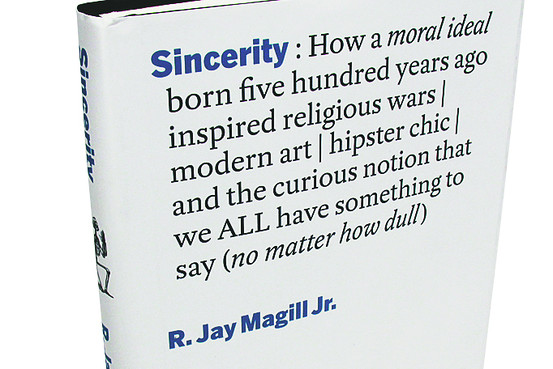
I haven’t formed a ‘unifying theory’ and, really, this is more a conversation for a grassy bank overlooking a beach … but I saw a book title yesterday that got me thinking about the role of individualism again …

via Erik Spiekermann

Here’s the NY Times review of Sincerity, by R. Jay McGill.

Looks interesting!

– P

Hard news for our country

Given my own very recent experience tearfully welcoming back loved ones from duty in Afganistan, I actually cried out when I heard this news on Morning Report today.

Oh, god.

– P

Criticism or demonisation? Thoughts about The Standard’s treatment of the Paganis

(image: lynetteshelley.blogspot - click)

I personally still don’t buy the ‘left wingers making death threats’ spin promulgated recently with faux ‘outrage’, ‘sympathy’ and ‘concern’ by certain right wing political propagandists. (see: ‘Wailing about death threats, forgetting what they’ve written themselves‘)

They’re just exploiting the evident divisions between some on ‘the left’. As they do. Making hay while the sun shines, they’re shedding transparent, convenient crocodile tears.

BUT … having now read more of the aggressive urine sprayed toward the Paganis on thestandard.org.nz over the past week, I do strongly object to what the site’s managers have allowed to become (effectively) a prolonged, one-sided campaign of denigration and abuse — much of it anonymous.

That this vituperation has been aimed at two individuals who’ve been deprived of a voice and right of reply on that platform — they’ve been banned from posting comments at the site apparently — seems to me to be ludicrously unfair.

I don’t know The Standard‘s main operator Lynn Prentice, nor Battlestar Galactica fan “Colonel Viper”. I haven’t had the chance to form an opinion about them. I do read the site now and then, not regularly, and find value there. I LOVED this description by one of the Moderators, RL:

Think of The Standard as a sort of neighbourhood pub, loud, noisy and sometimes a little heated; and for that reason it’s smart to leave an easily pricked ego or delicate sensitivity at the door. The bouncers are just here to ensure everyone has a safe time and goes home happy … one way or another…

… although the tone of its comment stream can become fraught and unwelcoming, as someone else noted:

We’re just as nasty as the right on our blogs, we’re just as stubborn and pig-headed, and we shouldn’t be. We should be BETTER because we ARE deep down.

I agree with some bloggers at The Standard about a few things.

I agree with those who condemn Cameron (whaleoil) Slater’s demonstrated actions creating real world negative consequences for people with whom he has had disagreements online. Sadly, THAT is what The Standard is effectively doing to John and Josie Pagani. Could it be a phenomenon I’ve referred to before: ‘Choose your enemies carefully because you will become like them’?

Let me explain. I’ve previously stated that in my view, contacting the employer of someone who’s differed with you online is ‘pretty despicable’. We have discussed my direct knowledge of Cameron’s use of that sleazy tactic in another context (I wouldn’t allege it otherwise). As well as that, there are documented examples: Cameron inciting his ‘army’ to bombard the employer of a commenter called ‘Axle’ whom Cameron identified after taking offence at (offensive) comments on his blog’s comment stream; his ‘outing’ of other contentious commenters like ‘DrCP’; and threats to expose the real identity of ‘Diabolos’.

Intimidation and threat seem to be at the heart of Cameron’s self-identity as a blogger and his slogan “NFWAB” which he recently ominously spelt out to Martin Devlin after a heated flare-up on Twitter. By threatening nasty consequences to those disagreeing with him, Cameron Slater, it pains me to say, at times acts like a nasty piece of work.

He is also, it seems to me, an untrustworthy witness (in that respect I share Duncan Garner’s opinion and others’) for today Cameron Slater blanketly denied engaging in such deplorable tactics. It was put to him by one of The Standard‘s bloggers ‘Micky Savage’ …
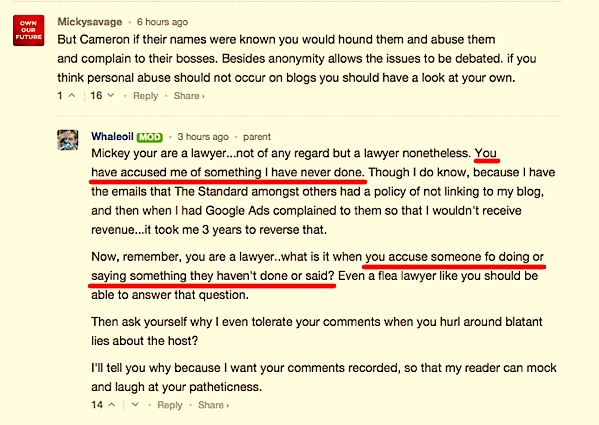
Cameron Slater accuses his accuser of "blatant lies" about his hounding and abusing commenters and contacting their employers. I find his denials implausible and unconvincing.

I don’t routinely refer to people’s religious beliefs. I have family, friends and tenants of all sorts of religious persuasions and take them as I find them. But for Cameron, who regularly publishes ‘Daily Proverbs’ espousing virtues of integrity and truth-telling (like this: “for I speak the truth and detest every kind of deception”) to publish such nakedly misleading statements is an indicator of something not right. Likewise, his preached ‘morality’ and condemnation of others, particularly Catholics, versus evidence of his own actions could raise questions. (Questions I won’t address. Every saint has a past, every sinner a future, as Wilde said.)

Further, Cameron’s malicious ‘weaponizing’ of Ports of Auckland employee private information was a low point for recent political debate. I wasn’t alone in seeing that as unethical. (I almost never make that allegation, BTW.)

Some would say he’s been matched by Paula Bennett’s dead obvious abuse of power in improperly releasing a beneficiary’s information as part of political debate. By coincidence, I saw Gerry Brownlee’s uninspiring and evasive responses on that topic when questioned by Green co-leader Russel Norman at Parliamentary Question Time on Thursday … and saw Norman’s unusually strong, much re-tweeted summary afterward:
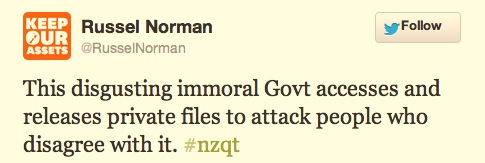
Gee, that’s harsh! (But do you see the connection?)

Anonymous comment: no free lunch

So, back to The Standard: I have many times previously expressed my own conflicted support for anonymous commenters/whistle-blowers and their right to remain anonymous (see An ‘abiding distrust’ for anonymous speech) but, ultimately accountable for their statements, where required, if they cause harm. But such a privilege MUST bring with it some limitations. Libel is not part of the package.

Some of the recent rash of nasty, often pseudonymous or anonymous comments at The Standard, taken as a whole, appears aimed at denigrating the integrity, professionlism and character of Labour activist John Pagani and former Labour candidate and commentator, his wife Josie Pagani. (I don’t speak for my wife, and I’m sure the Paganis aren’t joined at the hip.)

Cumulatively, the vitriol and venom poured on them by some commenters recently crosses the line into character assassination and trying to inflict what I referred to above: creating real world negative consequences, affecting such things as reputation, employment and livelihood. Continue reading →

Judge David Harvey on ‘judicial blogging’

"A hasty or badly expressed tweet could have regrettable consequences." — Judge David Harvey (pic: preparenownewsletter - click)

Here’s an interesting legal foray into some of the issues a Judge faces when considering involvement in social media.

The first thing is, as the New Zealand Guidelines point out, that Judges are a part of society and not aloof from it. Judges are an essential part of a functioning society under the Rule of Law. That said, Judges must keep up with changing trends and developments in society and recognise them.

Herein lies the problem. I have argued elsewhere that new technologies bring about behavioural changes that may influence shifts in values. But new technologies will not change such fundamental values as the importance of a fair trial, the need for an impartial tribunal or adjudicator and the right to be heard in a cause. These are essential properties of our shared justice system. Furthermore, it is well recognised that the Courts, of the three arms of Government, lack the power of the purse or the sword. Their legitimacy relies on public confidence. Actions by Judges that undermine that confidence, that give a suggestion of partiality, that may even unintentionally appear to give a taste that there is other than a fair system undermine public confidence. By the same token, public confidence may also be undermined by a lack of understanding of the judicial role or the law and how it works. The problem is finding the point of balance, and that is something that Judges do.

The various guidelines for behaviour suggest that there are occasions where judicial engagement outside the Court room may be welcomed but not at the expense of public confidence in the system or the erosion of trust in a judge’s performance of his or her role. That must be the primary guide for judicial engagement with social media and especially the judicial blogger.

I agree with him about the priority of confidence in the legal system. It’s paramount that we expect and have belief in a neutral system of justice, whatever our cavils about any particular decision. Look at the wound caused by, say, the injustice of the Arthur Allan Thomas trials.

He’s also right about the ‘behavioural changes’ in technology and social media bringing about shifts in values. Human nature won’t change, nor will our inclination for argumentativeness — there’s something about the immediacy of internet publishing which seems to provoke or amplify heated flame wars. Poison pen letters and harsh condemnation used to be a relatively private affair, with exceptions. Now people are living their lives and fighting their fights in public. The sheer ease of publishing formerly private correspondence (emails) or excerpts from them sees communication (or cyber debate/war) take on a new level of accountability and consequences. Oops. ‘Normal’ levels of hypocrisy (!), two-facedness, or a-bob-each-way-ism look rilly rilly bad when laid out in a pseudo-journalistic fashion.

Elsewhere in his article David Harvey points to the effective permanence of web publication:

A hasty or badly expressed tweet could have regrettable consequences. At least a blog may be subjected to a more deliberative process with opportunities to review and edit – or to decide not to publish a post at all. But certainly, given the quality of information persistence that characterises the Internet, the position should be that once published the contents of a tweet, a Facebook comment or blog post cannot be withdrawn.

Or, in his case, someone else’s tweet about his punny comment at a NetHui discussion about copyright (‘We have met the enemy and he is the U.S’) led to his need to remove himself to maintain confidence in the system.

Read David Harvey’s Social Media and the Judiciary at his very worthwhile blog: The IT Countrey Justice.

I think we’re richer for Judge Harvey’s interest and involvement in social media. And his brainpower.

– P

Wailing about death threats, forgetting what they’ve written themselves

20120818-003906.jpg
MOCK outrage from local right wing bloggers (the usual suspects) at left wing criticism of left wing activists appears disingenuous. At best.

A RWNJ blogger and chorus have been wailing about some public criticism (blogged) of some left wing activists by some LWNJ activists/bloggers and their anonymous feral commenters … even breathlessly interpreting references to Battlestar Galactica (I swear I’m not making this up) as death threats.

How awful he sighs, all a-vapour. How disgusting, he laments, oh me oh my, they must be sooo worried, while Punch (or Judy? or good cop?) David Farrar describes the interchanges as ‘sad’ and ‘a bit vile‘. Oh please.

David Farrar: @ImperatorFish That post is just sad – and a bit vile coming from someone who won’t even use his real name to smear people who do

The only trouble being this: the RWNJ pretending to sympathize with the Labour activists under friendly fire hasn’t exactly got a great track record himself, in this regard, routinely smearing in nasty personal terms his own fellow National Party members with calls for action to be taken against them.

I recently pointed to a comment where he described a former Party president in these terms:

MICHELLE BOAG IS A LYING, POISONOUS SCUMBAG

That same nasty diatribe offers this:

Michelle Boag is a cancer on the body politic of this country. She needs to be excised. Along with her long list of acolytes and supporters. She is as popular as herpes and as lethal as cancer.

“She needs to be excised”? Gee, could one read that as a death threat? Ya think?

Meanwhile, the defiantly politically correct Cactus Kate (Deputy Whale) seems to conveniently ignore her mentor’s bilious ravings …

CactusKate2: @dpfdpf @imperatorfish @johnpagani Apart from calling u a pinko DPF I don’t think right wing bloggers r capable of such a show #astonishing

Yes, #astonishing all right. Astonishing that she can suggest RW bloggers are not ‘capable’ of such a show, when she HERSELF called for Matthew Hooton to be drowned …

There are those on our side who are weak. And on the right, the weak need not be cuddled, they need to be drowned.
I am calling time on Matthew Hooton.

(Or have I misread you Cathy?)

Then there’s this dose of dubious ‘sympathy’ she adds to the insincere and histrionic ‘tsk tsk’ of her co-dependent mate

CactusKate2: @dpfdpf @imperatorfish a bit vile? @johnpagani should wield a knuckle duster find out who wrote it and mess his face up

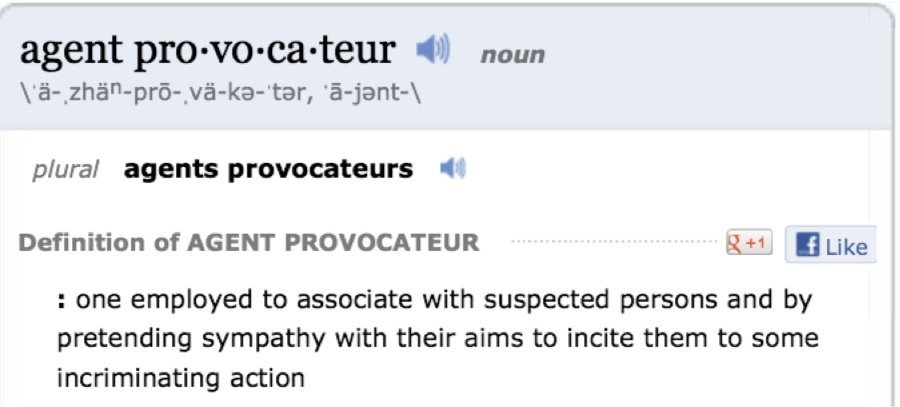
Agents provocateur, anyone?

20120818-001631.jpg

– P

Quick and easy reach for allegations of mental illness

20120817-232304.jpg

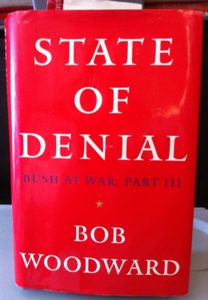
I read (devoured) Bob Woodward’s State of Denial — Bush at War, Part III while on holiday last week. I spotted the book on a shelf, plucked it down and thought, This may interest me. Boy, did I misunderestimate. It’s a really great read.

Woodward’s story is an extremely detailed and well sourced hatchet job on Rumsfield, Bush and Cheney. Probably well-deserved.

The agenda to invade Iraq, as Woodward explained earlier in Plan of Attack and the cynical use of a surge in public support (90% approval rating!!) following 9/11 to justify it is laid out in detail. The phantom WMD deceit is spelled out, coldly recording the Pentagon & White House sexing up the intelligence claims, plus the hopeless bureaucratic infighting and ‘not my problem’ attitude those (General Spider Marks) tasked with ‘finding and capturing’ WMD faced and otherwise well performing operators like CIA head George Tenet failing to speak up at crucial junctures.

The George W Bush administration was determined to go to war against Saddam’s Iraq, and history records how corruptly it did so, and also the failure and entanglement and cost of the campaign.

Having myself just welcomed back home safe a couple of young loved ones who’d completed dangerous military service tours of Afghanistan, I read the book with a sober recognition that these men in their fifties, Bush & Cheney, and sixty-eight (Rumsfield) were wagering with lives half their age, and less. I heard an Australian casino ad while I was away: “Bet with your head, not over it.” Ha! So insincere! And so, I came away thinking, were these neocons. Too bad.

Woodward has written a grim book but not a depressing one. Along the way, he records this famous bite back against criticism in the vein of Oscar Wilde’s ‘all one’s opponents are insane’ motif:

Though technically outside the governent since 1999, former House Speaker Newt Gingrich threw himself in to the mix, publicly blaming the the State Department for the failed diplomacy and for the idealogocal warfare within the administration. “The State Department is back at work pursuing policies that will clearly throw away all of the fruits of hard-won victory,” he said on April 24 in a speech at the American Enterprise Institute.
Armitage responded for Powell: “It’s clear that Mr Gingrich is off his meds and out of therapy.”
State of Denial chap 18 p 179

Oh, it’s sooooo easy to sledge the critic, huh?

Question his sanity and you don’t have to respond to the content of his criticism. I see that reaction all the time from the intellectually lazy or weak not too far from here.

– P

Been on holiday


I’ve just been away for a week with the whanau, hence the lack of posting here. I don’t like to announce trips ahead of time for reasons related to ‘security’. 🙂

We had a great time, not least because we (a) unplugged and enjoyed some good quality recreation and (b) re-connected with our loved ones just back safe from duty in Afghanistan. The tension waiting for that was extraordinary, and gave me a terrible empathy for the families of those in service there. I can only imagine what It’s like for those who’ve lost someone.

I’m grateful for the good in our lives.

– P

Quote approval is a defeat for journalists any way you look at it. Call their name.

Following up on my comment Flacks will always try this on. Resist. here’s an insider’s view from
Ari Fleischer, White House press secretary to George W. Bush 2001 to 2003 …

How Washington officials bested the media

The problem with quote approval is it’s too easy. It turns the relationship between a source and a reporter entirely over to the source. And the practice has spread too far and wide. Too many staffers will speak only if their quotes are approved and too many reporters are happy to oblige.

The relationship between a source and the press will always resemble a tug-of-war. Since the early days of our republic, government officials and the media have clashed. It’s part of the ongoing, generally healthy dynamic in our noisy democracy. Over time, the ground shifts and one party gains the upper hand, only to lose it back.

Of course, the media’s focus on the trivial — see coverage of Romney’s trip to England — makes sources fight even more for control, lest a sentence be misconstrued, exaggerated and hyperfocused.

But so long as reporters allow their sources quote approval, this round has been won by the sources.

Read on at CNN

That’s a big change in role for journos. What name should we call someone who peddles flannel or talking points for their sources? ‘Churnalist’? ‘Flack’?
Here’s Cheryl Cole:

It gets worse

In fine ‘whatever is whispered in secret will be shouted from the rooftops’ style, allthingsD’s Arik Hesseldahl reports a US judge has just ordered two competing corporations, Oracle and Google, to DISCLOSE which ‘journalists’ they paid to ‘report’ on their trial…

Judge Orders Google and Oracle to Disclose Who They Paid to Write About Java Trial

In something of a peculiar turn in the nearly concluded lawsuit between Oracle and Google over the Java platform, the judge in the case has ordered both parties to disclose who they paid to cover and write about the trial.
Judge William Alsup, who presided over the case in the U.S. District Court for the Northern District of California, wrote in his order that he’s “concerned that the parties and/or counsel herein may have retained or paid print or Internet authors, journalists, commentators or bloggers who have and/or may publish comments on the issues in this case.
Google and Oracle have 10 days from today to “file a statement herein clear identifying all authors, journalists, commentators or bloggers who have reported or commented on any issues in this case and who have received money (other than normal subscription fees) from the party or its counsel during the pendency of this action.”

Read on at allthingsD

Propagandists?

– P

A nice description of the journalist’s conceit (as in fanciful notion, not pride)

image: beinspired2.com.au (click)

From Jeff Himmelman’s NY Times review of Yours in Truth — A Personal Portrait of Ben Bradlee.

Some journalists seem incapable of seeing flaws in themselves or their heroes. They suspend their professional skepticism as if they’re not bound by the usual rules of gravity. It’s a kind of self-important higher-calling disease that has made some among us less responsive to the public. In Brad­lee’s life as relayed by Himmelman, even the shrewd and remote editor gets consumed by his own celebrity — followed by adrenaline withdrawal — in Water­gate’s wake.

In a book he wrote in 1975, “Conversations With Kennedy,” Brad­lee tars his old friend for pettiness and vanity in what feels like envy for the one person more charming and powerful than himself. (This, by the way, is exactly what Himmelman does to Woodward in “Yours in Truth,” pointing out rough spots in the name of love and friendship.) We find there’s a mean speck to Brad­lee’s brashness. “He knows that he’s hurt some people,” Himmelman writes, “but in the grand scheme he doesn’t let it slow him down all that much.”

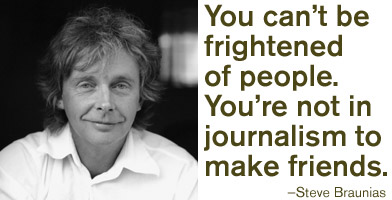
Yah. Journos can be very tough friends to have because we have this urge to demonstrate a kind of impartiality or forthright honesty even when at times it’s confusing and inconvenient and hurtful to others. Journalists, as Himmelman says, ‘tar’ even those we respect and like.

On the other hand, there can be a media love affair with a public figure, with members of the press offering them a kind of non-critical honeymoon. But deep down, we feel conflicted about that too and look for ways to redress any imbalance, and offer a whack to keep us ‘balanced.’

People who misunderstand that can sometimes accuse us of being two-faced, but there’s a kind of noblesse oblige which applies — an (imperfect) attachment to ‘the truth’ which is at the heart of the Ben Bradlee/Washington Post legend and story.

As we discussed when considering Michael Hastings in The new breed of journalist-commentator and Playing whack-a-mole with ‘da media’ an ’embedded’ journalist can find themselves in a very conflicted place. They can be dangerous:

“Having a journalist around is like having a pet bear. Most of the time it’s really cool, but once in a while it’ll bite your hand off.” — Michael Hastings after General McChrystal resigned following being quoted in Hastings’  Rolling Stone article and the subsequent scandal.

– P

One of my favourite right wing vixens pulls the plug, citing her children

Photograph: Olivia Harris/Reuters via The Guardian

Oh noes!

MP Louise Mensch resigns to move family to New York

Louise Mensch, possibly the most well-known Conservative backbencher, has resigned as MP for Corby and East Northamptonshire, citing the difficulties of trying to balance her family life with political commitments.

Mensch and her three children will move to New York to live with her husband, Peter Mensch, who is based in the city where he works as manager of Metallica, Jimmy Page and the Red Hot Chili Peppers. She married him last year after her first marriage broke down.

Mensch said every effort had been made to ensure she could stay in her role, but she had ultimately made the decision to ensure the welfare of her family.

“I am completely devastated. It’s been unbelievably difficult to manage family life,” she said. “We have been trying to find a way forward with the prime minister’s office but I just can’t spend as much time with my children as I want to.”

Read on at The Guardian

Quite a good follow up piece here from Gabby Hinsliff: The lessons of Louise Mensch’s departure? There are none.

Well, maybe. Too bad. Good on her for being clear about her priorities.

I respected MPs as diverse as Pam Corkery, Katherine Rich and Simon Power for getting the hell out of politics when they saw how it worked from the inside. As Bismarck said:

“Es gibt zwei Sachen da sollte man besser nicht wissen wie es gemacht wird – Wurst und Politik”.

“There are two things you don’t want to see being made: sausages and legislation”.

It crosses my mind to wonder what NZ’s own good-looking former right wing vixen (now ‘apoliticalahem) Cactus Kate will have to say about this for-the-sake-of-my-children decision, if anything.

At least Louise Mensch didn’t torch her Party’s caravan on the way out and abuse her former team mates as ‘giant titheads’, as Cathy did. Nor did she, as far as we know, back-stab, undercut and sabotage the political careers of other female Party candidates who didn’t meet her required level of idealogical purity. Then leave.

Lessons in class.

– P

Read this and tell me it doesn’t remind you (just a little bit) of John Key’s SkyCity Casinos convention centre deal for extra pokie machines

Is there any doubt that people who work on Wall St acquire a Wall St culture? No. But the idea that Wall St firms adopted MAFIA culture and techniques, as claimed ... wow, that's new. (pic: capitalistbanter.com - see below)

Dave Pell’s Next Draft recommended weekend read was Matt Taibbi’s The Scam Wall Street Learned From the Mafia in Rolling Stone magazine. I agree. It’s a fascinating read, but kind of sickening too.

USA v. Carollo marks the first time we actually got incontrovertible evidence that Wall Street has moved into this cartel-type brand of criminality. It also offered a disgusting glimpse into the enabling and grossly cynical role played by politicians, who took Super Bowl tickets and bribe-stuffed envelopes to look the other way while gangsters raided the public kitty. And though the punishments that were ultimately handed down in the trial – minor convictions of three bit players – felt deeply unsatisfying, it was still a watershed moment in the ongoing story of America’s gradual awakening to the realities of financial corruption.

Earlier, Matt Taibbi’s article says

In fact, stripped of all the camouflaging financial verbiage, the crimes the defendants and their co-conspirators committed were virtually indistinguishable from the kind of thuggery practiced for decades by the Mafia, which has long made manipulation of public bids for things like garbage collection and construction contracts a cornerstone of its business.

How that relates to the SkyCity Casino deal to build a convention centre in Auckland “at no cost to the taxpayer” in exchange for a law change allowing hundreds of extra pokie machines: Well, certainly NOT the criminality aspect, in my view — that’s probably a step too far.

But the cynicism and what looks like demonstrable manipulation of a supposedly public tender process may — possibly — have some relevance. viz: Continue reading →

The dignity of the office

There are roles the political leader of a country plays that are non-political. They are a task of the office rather than the office-holder. A prime minister responding to a national emergency, for instance, or representing our country in times of grief or alarm.

John Key does these well, in my opinion. His everyman, guy-next-door likability serves him, and he delivers the (no doubt scripted) appropriate words appropriately and with an apparent sensitivity which goes over well.

His role in that moment is not to ‘solve’ the problem, but to help ‘salve’ our pain. He represents us, offers sympathy on behalf of us all, evokes community solidarity and promises of collectivism the detail of which will follow later. Think of his appearances at the Pike River miners’ memorial, at the Christchurch earthquake services, and other episodes of national shock and mourning.

So it was yesterday, announcing the sobering details (gut-wrenching for those of us with loved ones serving in the military in Afghanistan) of the deaths and injuries inflicted on NZ Defence Force personnel over the weekend.

Credit where it’s due. He is a good communicator in those situations.

– P

Heart warming NYC cabbie story

I like New York. I’ve never felt unsafe there.

– P

via John Gruber

Good values, positively expressed

I briefly mentioned the challenges someone advocating for ‘better’ can face, with other ‘crabs in the bucket’ pulling them back as ‘sanctimonious and hypocritical’ (see Choking on one’s own sanctimony …)

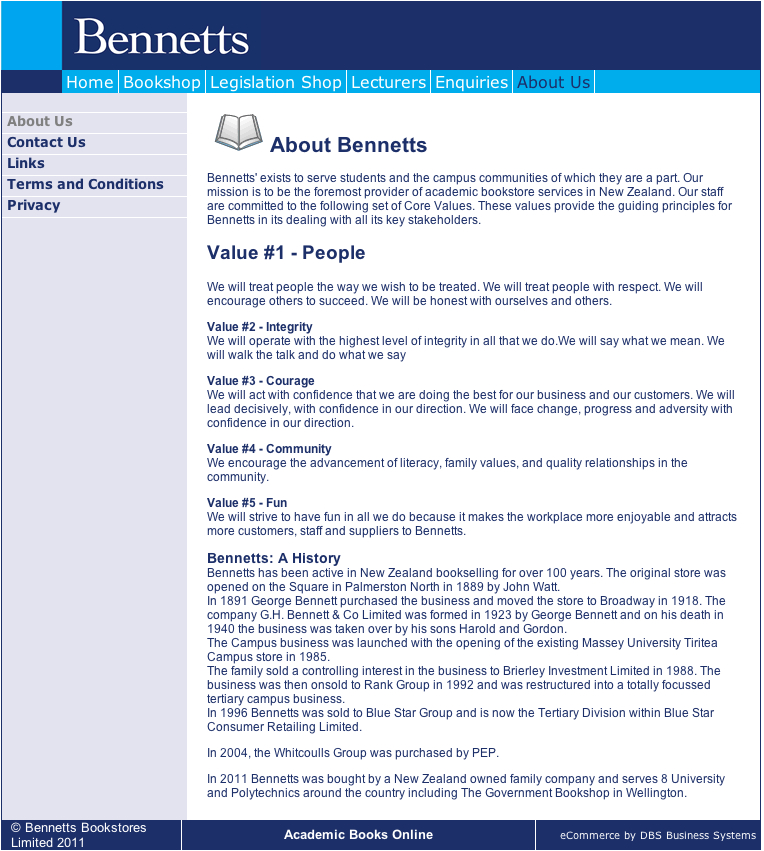
Here’s nice model from Bennetts Bookshops … pointing to their ‘Core Values‘.

Bennetts exists to serve students and the campus communities of which they are a part. Our mission is to be the foremost provider of academic bookstore services in New Zealand. Our staff are committed to the following set of Core Values. These values provide the guiding principles for Bennetts in its dealing with all its key stakeholders.

Value #1 – People
We will treat people the way we wish to be treated. We will treat people with respect. We will encourage others to succeed. We will be honest with ourselves and others.

Value #2 – Integrity
We will operate with the highest level of integrity in all that we do.We will say what we mean. We will walk the talk and do what we say

Value #3 – Courage
We will act with confidence that we are doing the best for our business and our customers. We will lead decisively, with confidence in our direction. We will face change, progress and adversity with confidence in our direction.

Value #4 – Community
We encourage the advancement of literacy, family values, and quality relationships in the community.

Value #5 – Fun
We will strive to have fun in all we do because it makes the workplace more enjoyable and attracts more customers, staff and suppliers to Bennetts.

Of course, it helps that they’re not blogging critically about others (!), thereby not making themselves a target. But still, nice work … declaring where they’re coming from and publishing aspirational statements.

It’s important and useful, I think, to do that in a positive way, rather than just what I called ‘anti-matter’ self-definitions.

– P

What a strange coincidence [Updated]

Let’s just put a pin in this and come back to it later …

Ms Boag, as well as all recipients of the email – including Ms Collins, ACC chief executive Ralph Stewart and Mr Judge – have denied leaking the email.

But Ms Collins told the Herald last night that the email from Ms Boag was forwarded to Mr Judge’s personal and only email account.

She had been advised by ACC that Mr Judge had his home computer replaced some time in April, and his old one “is no longer able to be accessed”.

“In addition, I’ve now been advised that Mr Judge was given an iPad from ACC … and that iPad was wiped clean by Mr Judge’s computer expert before it was returned to ACC in June.”

Ms Collins told the Herald: “I am aware now that that is an issue around being able to access the forensic data which would normally be on the computer.”

Ms Collins said she could make no further comment because the matter was still subject to the Privacy Commissioner’s inquiry.

Mr Judge was unavailable to respond to Ms Collins comments last night but earlier yesterday said he did “absolutely not” leak the email.

From Adam Bennett NZ HeraldEx-chair’s moves slow ACC probe, says Collins

Caption competition, anyone?

– P

UPDATE (so soon!):  Oooh, look: John Judge has responded, describing the ‘wipe’ claims from the Minister as ‘pathetic’ and saying they ‘are untrue and an attempt to “blacken” his name’ – see Adam Bennett’s follow-up Ex-ACC boss denies Collins’ claims

Former ACC Chairman John Judge says ACC Minister Judith Collins’ claims he hampered an investigation into a the leak of a sensitive email are untrue and an attempt to “blacken” his name. …

… Mr Judge said Ms Collins was aware that he replaced his home computer before the Privacy Commissioner’s inquiry was announced.

“Everything was transferred from my old computer to the new one anyway. It’s not like anything disappeared.”

Furthermore, he was not able to receive emails on his ACC iPad anyway.

He said Ms Collins “knew the truth” and was “just trying to blacken people”.

The email was among documents submitted by ACC to police to support a complaint it made against Ms Pullar.

NZ Herald