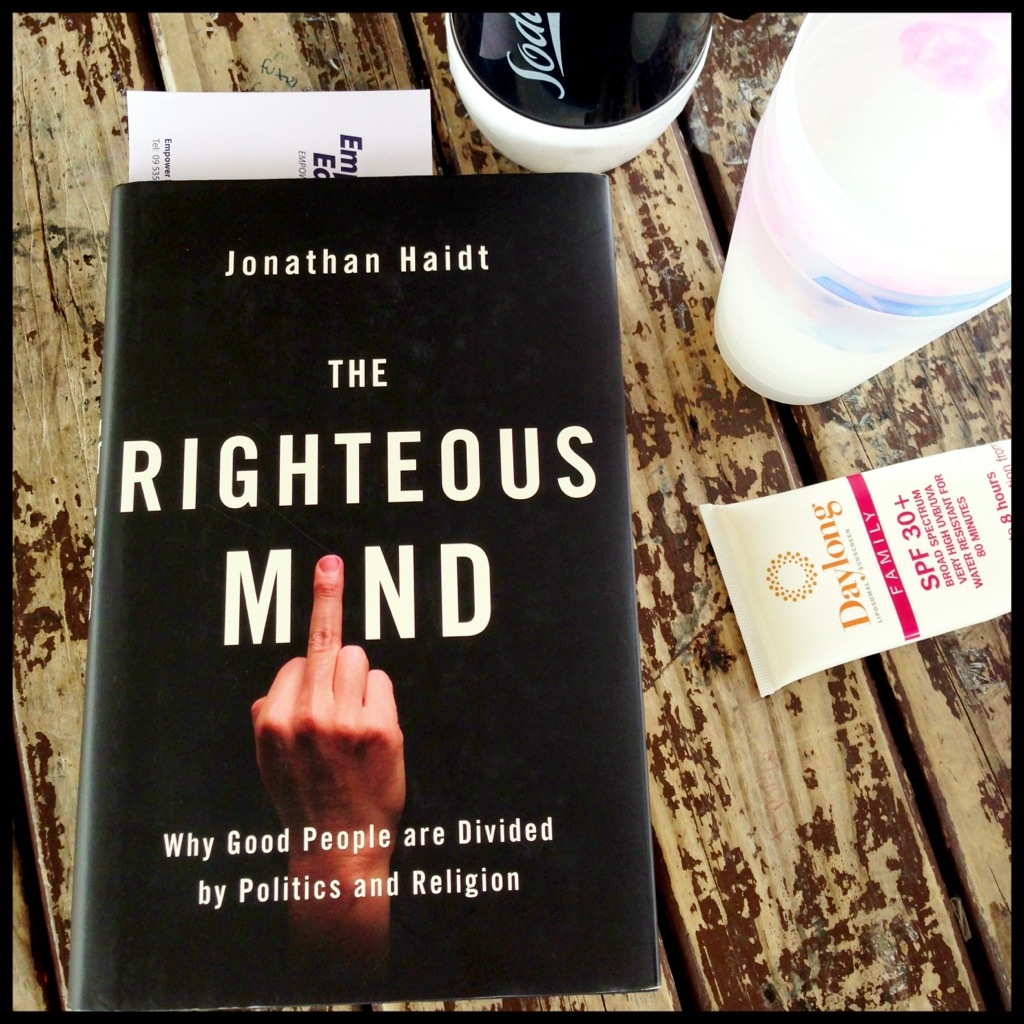
Would this policy stop impostors and sock puppets … or just cripple Twitter?

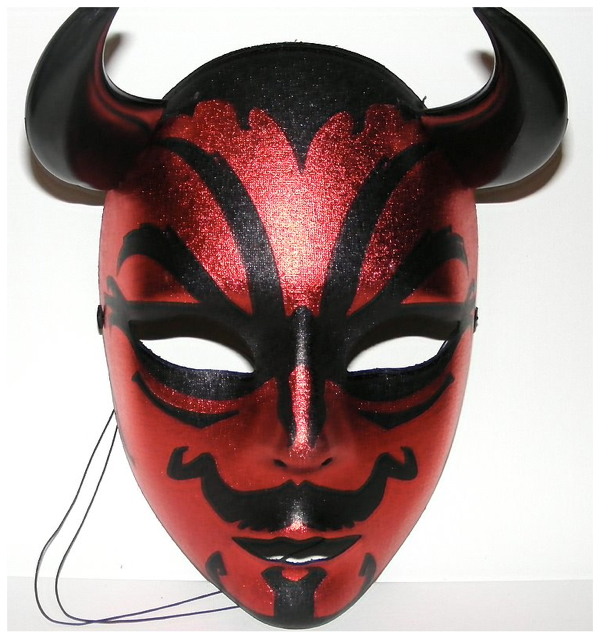
pic: venicemaskedball.co.uk - click

pic: venicemaskedball.co.uk – click

No masks

I noticed a comments policy at the foot of a fascinating, sad article on Frontline about Nancy Lanza: Raising Adam Lanza (worth a read).

As we’ve discussed recently, there’s a ‘cabal’ or two of impostors pretending to be other people for whatever various disclosed and undisclosed reasons (see Spoofing David Fisher and The dissatisfying hollowness of @BarnsleyBill, Russell Beaumont’s internet impostor and Let a little air in, @BarnsleyBill.)

So these ‘guidelines’ kinda-sorta jumped out at me.

In order to foster a civil and literate discussion that respects all participants, FRONTLINE has the following guidelines for commentary. By submitting comments here, you are consenting to these rules:

Readers’ comments that include profanity, obscenity, personal attacks, harassment, or are defamatory, sexist, racist, violate a third party’s right to privacy, or are otherwise inappropriate, will be removed. Entries that are unsigned or are “signed” by someone other than the actual author will be removed. We reserve the right to not post comments that are more than 400 words. We will take steps to block users who repeatedly violate our commenting rules, terms of use, or privacy policies. You are fully responsible for your comments.

I recall last year there was a spate of commenters at interest.co.nz using other people’s well-established user names from the PropertyTalk forum to maliciously sew confusion, it seemed to me. The use of the @BarnsleyBill sock puppet/profile on Twitter by ‘three or four other people’ (besides long-time user ‘Russell Beaumont’) as discussed (link above) also seems to somewhat fit into that category: murky.

We’ll never see the end of the use of noms de plume, it seems to me, but is it possibly a good start to introduce policies like Frontline’s?

Yeah.

– P
Is internet ad filtering THEFT? Or a response to abuse?

Competing for eyeballs — but not at all costs, surely? (pic: arbroath.blogspot.com - click)

Competing for eyeballs is fine — but be aware your actions have consequences. (pic: arbroath.blogspot.com – click)

I’ve worked in commercial radio so I understand the commercial reality: In radio, TV, newspapers and magazines, advertising revenue is what keeps the lights on. Advertising pays the bills.

Traditionally (which doesn’t always mean it’s good, right?) advertising in these media has been predominantly a version of interruption marketingviz. find something your target audience is interested in, then interrupt them with your commercial messages, painfully (but not enough to drive them away).

On a related thought:, journalists pride themselves as truth-tellers, feeling even better about it if the truth being told is inconvenient to those in power:

“Journalism is printing what someone else does not want printed.” — George Orwell

Another view was nicely expressed by Jack Shafer recently:

Journalism is what’s on the other side of the ad.

Which got me thinking.

‘New media’ or internet marketing, like everything else in life, demands a learning curve. And boy, it’s been ugly at times. Personally, I find TV on demand, with its insistence on playing the same ad three or four times during an episode of, say, Homeland, or The Daily Show at the light end of the annoyance spectrum.

On the other hand, serpentine, swirling ads near and all over news websites are an unwelcome intrusion into my consciousness — when I’m trying to read, dammit! — and it’s one that I don’t tolerate for long.

On my day-to-day web browser I use Safari AdBlock and GlimmerBlocker to shield me from the time- and attention-wasting circus of internet ads (particularly animated ones).

I leave Google Chrome unfiltered and, indeed, routinely rely on Chrome’s embedded Flash player to view content that my otherwise Flash-less set-up cannot decode — but that’s less and less because of the widespread use of the HTML5 video standard, in part due to the increasing use of mobile browsers including Apple’s iOS.

So, because of my set-up I don’t generally even see the ads … but when I do, I’m aghast at how dominating they are. (For instance Facebook. Bleurgh!)

I have, in my professional life, paid for web advertising in the form of banner ads (but not Google Adsense) and accept that my ‘message’ will be filtered out by people like me, even if we’re actually interested in the products or services being offered. I have to find a better way to reach them.

I see that filtering as your right to control what comes into your house, and akin to muting the ads on TV or putting a ‘no junk mail’ sticker on your letterbox. But some in the ad industry seem to look at it differently: like, by using an ad blocker I’m stealing. Say what?

From an article Ad Blocking: Theft Or Fair Use? by Josh Dreller, Director Client & Industry Solutions at Visual IQ (via AdExchager) …

Ad Blocking = Stealing

I bet most users would applaud an ad-free Internet. However, if ad blocking were considered “stealing,” would most people pause and reconsider? I believe so.
So let’s call it what it is. Circumventing the fair value exchange of free content on a website is basically like downloading pirated music or jumping over the subway station turnstile. Users “pay” to access content by allowing ads to be shown adjacent to the free content they’re consuming. I doubt the Internet users who can’t wait to block ads would also then pay $5/month to read ESPN.com, IMDB.com, etc. Many people would probably pay for Facebook, but not the billions that are on the social network now. Can you imagine people paying per video on YouTube?

Continue reading →

We are ALL self-righteous hypocrites

20130217-164430.jpg

So, I’ve finally found the space to read Jonathan Haidt’s masterpiece The Righteous Mind which was a much-appreciated Christmas gift. I’m enjoying it. Very persuasive.

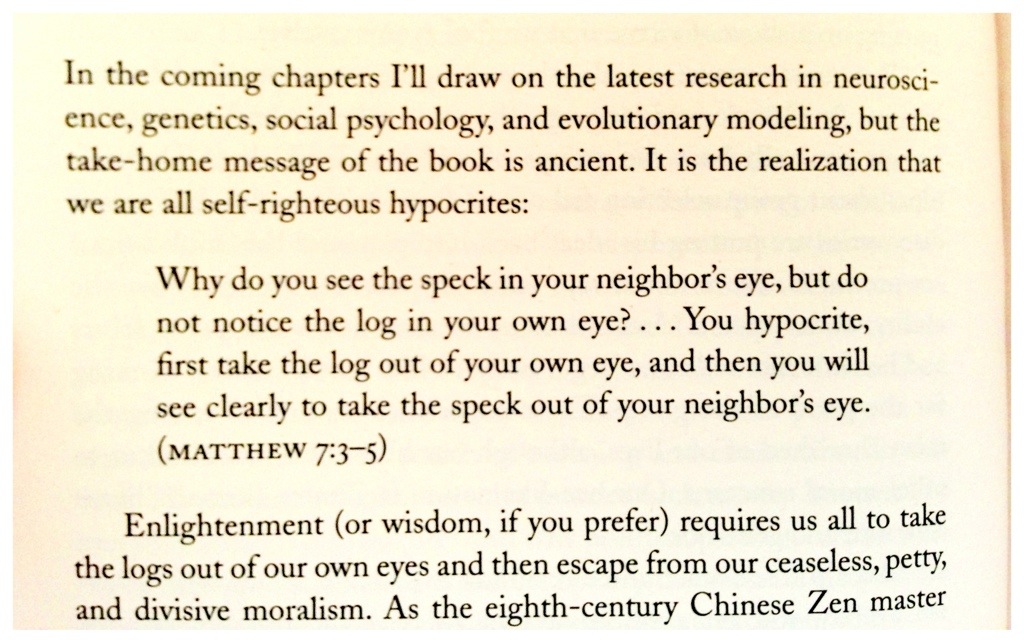
A slam in the early pages is this: “… the take home message of the book is ancient. It is the realisation we are all self-righteous hypocrites.”

20130217-164653.jpg

Well! OK then. Glad that’s out in the open.

– P

Addictions

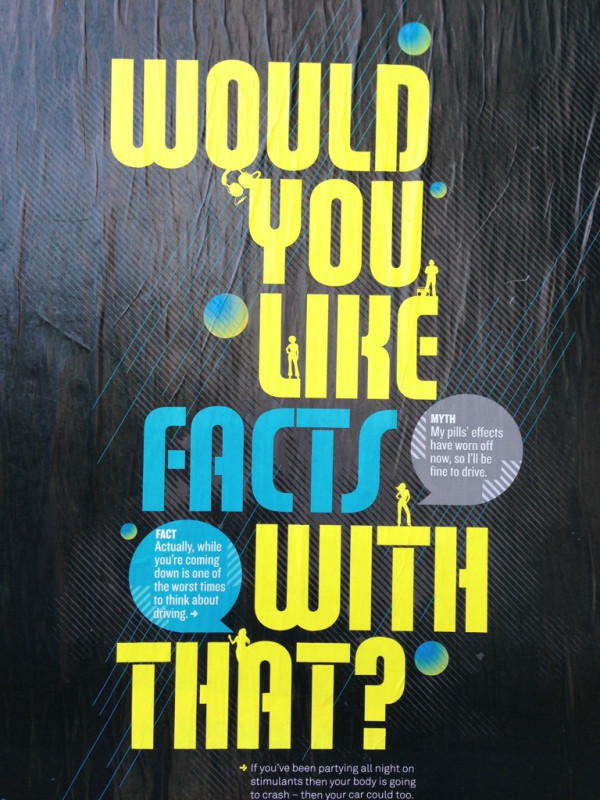
‘Driving High’ drug awareness campaign poster (click to enlarge)

I spotted this poster on a wall near my office in Epsom (John Banks country) and it reminded me of a time long ago in the omigod 1980s when I ran a street theatre company with a group of Christian friends. I wrote our scripts and acted in or narrated many of them.

‘Wholemeal Theatre Company’ our sandwich board said — and, being windy Wellington, that board was made of the heaviest wood we could manage … so it didn’t blow down Cuba Mall and clonk an innocent passerby mid-performance. In tone we were all very Python-esque, people said (I loved Monty Python, still do, and aimed for a Not the Nine O’Clock News, Alas Smith and Jones feel) … it seemed well-received and we loved doing it.

Through that street theatre group I was lucky enough to participate in an acrobatics workshop (really challenging!) with some friends and dancers from the Royal NZ Ballet … but that’s another story.

Anyway, one day after a lunchtime street show I was approached by someone from ALAC — then the Alcohol Liquor Advisory Council — and, long story short, we were commissioned by them to do a series of pointed comedy sketches and performances on the topic of why/how misuse of booze can be dangerous. We were happy to do it. Good times.

From the look of this poster, whoever is running alcohol/drug education these days is still going for a quirky approach.

Good on them.

Do you have ‘an addictive personality’? Welcome to the human race!

From my point of view the ‘social problem’ caused by alcohol abuse is not usually about the particular substance — human societies all around the world have found ways to create alcohol — from malt & hops to wine made with grapes or plums or pears to sake to cane liquor and whisky, vodka and moonshine.

In fact, history shows we’re very good at finding all sorts of substances to abuse on our way to reaching an ‘altered state’. A school friend of mine was so desperate for a ‘high’ he ingested drugs designed to save dogs who had swallowed 1080 poison. Continue reading →

Cameron Slater is social media “beef lasagne”

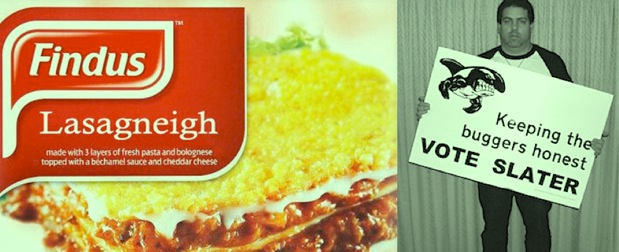
Images left: radio times.com right: Cameron Slater

Truth in advertising? Meh, I don’t think so. (Images, left: radiotimes.com right: Cameron Slater)

Oh dear. In another example of his near-pathological ‘I-can-dish-it-out-but-can’t-take-it’ mindset, Pakuranga’s social media thug Cameron Slater is emoting ‘upset’ about comments on Twitter. (sigh)

This loutish, heavy-handed propagandist makes a habit of cyberstalking, goading and abusing public figures and those whom he perceives as the National Party’s political enemies … and some within the Party who have offended him like Michelle Boag who knocked his dad off the Party President perch.

Cameron and his mostly pseudonymous cabal of wide boys seem to delight in provoking bite-back from public figures. (I’ve written about this before See: Drunken yobos spit in MP’s face, then skite to their mates like idiot schoolboys and Stalker Cameron Slater: new year, same bullsh*t.)

I see Cameron Slater as the horse meat “beef lasagne” of South-East Auckland social media, with his frequent use of deceptive labels. He exhibits an at best tenuous grip on the notion of ‘facts’ — routinely twisting and distorting real events with apparent disregard for fairness and accuracy. He gives spin doctors a bad name.

Cameron’s schtick is fizzing up nonsense for the purposes of Shock! Horror! spittle-flecked and dishonest attacks on people with whom he disagrees online. His purpose is to ‘hurt’ them. If by his ravings and incitement of his followers he can cause negative ‘real world’ effects for his targets (like, say, financial, or their employment), then all the better, according to this nasty bully-boy. (He has spelt all this out on his histrionic hate blog — search for ‘NFWAB’.) So much for free speech.

Cameron also gloatingly celebrates a ‘Sledge of the day’ (so long as it’s not one aimed at him or one of his his political heroes, right?) But, oh noes, today Cameron is breathlessly affecting a case of the vapours with journalist David Fisher for a mean joke on Twitter (oh, please) which cited one of Cameron’s blog posts about depression … as merrily documented on his blog in his typical shrieking, one-eyed, half-the-story fashion. Continue reading →

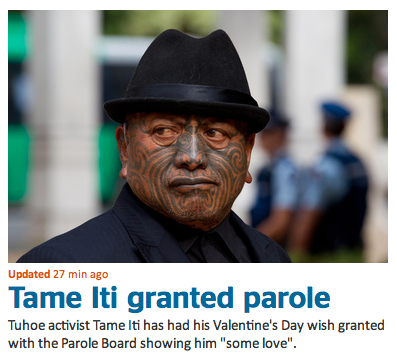
Did Tame Iti *really* ‘pose a risk to the community’?

Tame Iti to be paroled

NZ Herald (click)

From the NZ Herald today:

Tuhoe activist Tame Iti … will be freed on bail in a little over a week’s time, having served nine months of a two-and-a-half year jail term.

He and Te Rangikaiwhiria Kemara were sentenced to two and half years in prison after being found guilty during a trial last year of six firearms charges and not guilty of four.

The Parole Board will release Iti from prison in a little over a week’s time.

A spokeswoman said the board was satisfied Iti no longer posed a risk to the community.

Iti will be subject to conditions but the board will not release those before the full decision is released in the next two days.

Questionable. Certainly, as others have noted, there was something implausible about the explanations offered for the Urewera bush camps.

Or do the Police & state security apparatus’s improperly-authorised and illegal spying tactics (even well-intentioned, as in this case) pose more of a risk?

Worth thinking about?

Meanwhile, in a related embarrassing ‘security’ matter, Dotcom case: GCSB defends secrecy over evidence (NZ Herald)

The Government Communications Security Bureau (GCSB) is appealing against a High Court ruling that it needs to disclose evidence it gathered while it was spying on the internet mogul.

The involvement of the GCSB was exposed during a judicial review into the legality of a police search warrant on Dotcom’s Auckland home and the seizure of his assets – which were found to be illegal.

Dotcom was later cleared to pursue a case for damages against the police and the GCSB.

At the Court of Appeal in Wellington today (Thur), Crown lawyer David Boldt said Chief Justice Helen Winkelmann erred in ordering the GCSB to hand over substantial discovery.

“We say Her Honour was wrong to order the extent of discovery in this case.”

The discovery would “raise issues”and cause delays to Dotcom’s extradition hearing, he said.

Continues here

Oh dear.

– P

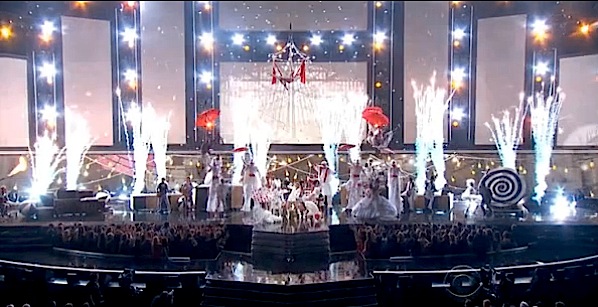
Taylor Swift at the Grammys

Taylor Swift at the Grammys.  Big.

Taylor Swift at the Grammys. Big.

This girl has got it.
(And what a production number!)

Note for the Flash-less: A (sadly, much lower quality) video clip of the performance is available here at YouTube.

– P

An update on Michael Williams and the Howick Local Board

Michael-Williams-points-fingerFor those interested, a move to get the Howick Local Board to even discuss the pending drink-driving and related charges against the Board’s chairman Michael Williams FAILED at last night’s Board meeting.

As previewed in the Howick Pakuranga Times (Challenge to chairman to stand aside), board member Lucy Schwaner attempted to raise as Extraordinary Business her motion suggesting Mr Williams take a leave of absence until his defended hearing on charges of driving with excess breath alcohol and failing to accompany a police officer is complete.

Mr Williams is due to appear at a defended hearing in the Manukau District Court on March 1, charged with drink-driving and refusing to accompany a police officer.
The court action stems from an incident last May. Mr Williams allegedly recorded a reading of 169 millilitres of alcohol per litre of blood, more than twice the legal limit. He says he’s been advised by his lawyer not to comment.
Ms Schwaner says the board is being brought into disrepute by Mr Williams’ personal problems.

Matters to be discussed in the extraordinary business section of the Board meetings are subject to a vote by members — ostensibly on the grounds of whether they are regarded as sufficiently urgent.

Ms Schwaner’s motion — merely to have the matter discussed by the Board — failed by a vote of 3 to 5, with Mr Williams abstaining. That means (to spell it out) these Local Board members did NOT see this as a matter worth even discussing last night:

Jim Donald
Wayne Huang
Steve Udy
John Spiller
Shirley Warren

For the record, I attended the meeting last night and in the public forum (before the business part of the meeting) repeated my call from last month (see Bunfight at Howick Local Board) for Michael Williams to step aside as chairman until the charges against him are resolved one way or the other.

This is what I said: Continue reading →

Cycling John Key

20130210-204735.jpg

From the New Zealand Prime Minister’s Twitter stream:

@johnkeypm: I rode the Queenstown Trail today. It is part of the NZ Cycle Trail Network. http://t.co/8pg3gMgU

Jemima Khan’s must-read article about Julian Assange

Julian Assange Photo: Phillip Toledano

Julian Assange (Photo: Phillip Toledano)

In this insightful, articulate article, Jemima Khan addresses some of the issues and events surrounding Wikileaks and Julian Assange … and echoes one of my perennial themes: tribalism and how it blunts understanding.

On the subject of Assange, pundits on both the left and the right have become more interested in tribalism than truth. The attacks on him by his many critics in the press have been virulent and highly personal. Both sides are guilty of creating political caricatures and extinguishing any possibility of ambivalence. “On the other handism” doesn’t make great copy, but in this particular debate everyone is too polarised. The kind of person who spends his life committed to this type of work, wedded to a laptop, undercover, always on the move, with no security, stability or income, is bound to be a bit different. I have seen flashes of Assange’s charm, brilliance and insightfulness – but I have also seen how instantaneous rock-star status has the power to make even the most clear-headed idealist feel that they are above the law and exempt from criticism.

Read Jemima Khan on Julian Assange: how the Wikileaks founder alienated his allies at The New Statesman.

– P

UPDATE 15 Feb: And here’s Assange supporter John Pilger’s response in the New Statesman…

WikiLeaks is a rare truth-teller. Smearing Julian Assange is shameful

Khan refers to a “long list” of Assange’s “alienated and disaffected allies”. Almost none was ever an ally. What is striking about most of these “allies” and Assange’s haters is that they exhibit the very symptoms of arrested development they attribute to a man whose resilience and good humour under extreme pressure are evident to those he trusts.

Worth reading. Pilger points to the repeated smear of Assange as “paranoid” — which was an early theme I picked up long ago, too, I recall. See Paranoid (?) but a whistleblower

Can Bob Jones hear himself?

Relating to the controversial boxing match between Sonny Bill Williams and Francois Botha:

“The whole performance was degrading to the sport of boxing. It was a joke.”

Oh dear.

So who CAN afford a house?

Home Affordability Planning Calculator - NZPIF (click)

It can be good to challenge assumptions. Here’s an article by my pal (and fellow investor and author) Andrew King, president of the NZ Property Investors Federation.

Andrew examines the subject of the ‘Housing Affordability Crisis’ — a contentious political issue at present — and finds it mislabelled. According to him it’s more a ‘Housing Expectation Problem’ and a ‘Housing Priority Dilemma’.

See if you follow his reasoning, and have a crack at the handy online calculator.

It might surprise you.

– P

Top posts – January 2013

Some of the most-viewed posts at ThePaepae.com in January …

graphic: logicalagent.com

  1. Bunfight at Howick Local Board
  2. Spoofing David Fisher
  3. What I didn’t say at the Howick Local Board last night
  4. Farewell Aaron Swartz
  5. Top 10 NZ property investment books – Auckland City Libraries
  6. About The Paepae
  7. Mr Phil Jones: re-heating cold horseshit
  8. Is Android catching up? Maybe.
  9. Shaun Stenning (tag)
  10. This disgusting ad from the NRA is *meant* to offend us
  11. Watchdog issues warning about Sean Wood Property Tutors enterprise
  12. More than one way to screw your own online reputation
  13. Current affairs through partisan filters. David Bain in limbo.
  14. Judith Collins “breaching natural justice” in Bain case
  15. Linking to sources — why it’s vital for credibility (Case study: property spruiker Sean Wood)

I always find this interesting.

– P

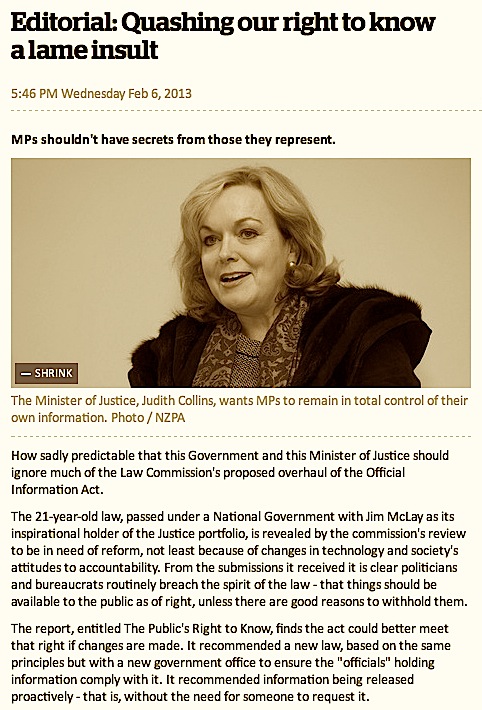
Who do politicians think they actually work for?

Read today’s editorial  in the NZ Herald about the Official Information Act … and ask yourself.

The Minister of Justice, Judith Collins, wants MPs to remain in total control of their own information. The Government’s response to the report has shamefully and summarily dismissed opening Parliament to the act. “The government does not agree with the Law Commission’s recommendation and supports the status quo”. It also won’t make the Officers of Parliament, such as the Ombudsmen, subject to the act.

… Former Law Commission president Sir Geoffrey Palmer has rightly decried the refusal to open Parliament to OIA scrutiny as specious; the reasons a smokescreen.

Here’s a fuller report of Geoffrey Palmer’s comments … Continue reading →

‘Don’t mention the war.’ Or Waitangi?

Of course John Cleeese’s ‘Don’t mention the war’ is regarded as classic comedy …

… but when it comes to the Treaty of Waitangi, there are other, not nearly so satirical calls to avoid discussing contentious topics.

Indeed, there are attempts to continually dismiss calls for redress — of genuine, documented, historic injustices (including large scale land theft) some enabled by racist government policies and actions over generations. Some contemptible ‘commentators’ characterise any Waitangi claims as coming from sub-humans looking for handouts from a gravy train.

In my opinion, the negotiations to settle Treaty of Waitangi claims that have succeeded (as some unquestionably have) have resulted from the exercise of courage and goodwill — under fire sometimes, as we discussed relating to Doug Graham. The willingness of Maori to accept Crown apologies and, in some cases, merely symbolic settlement of grievances has been striking. Forgiveness always is.

But of course, none of that stops the heckling. Continue reading →