Depression is real stuff

Rachel Maddow. (image Huffington Post)

From an excellent profile of the awesomely good Rachel Maddow ‘Rachel Maddow’s Quiet War’ in the June Rolling Stone magazine:

“Yesterday was like a four-star show, I was totally into it,” she says. “Today and Monday – like, blaagh. Like, doesn’t get any worse. I’ve been doing this for four years! Why do I still have one-star shows? It’s me – failure.”
I ask her why she is so hard on herself. “My reaction to that is to say, ‘Oh, another bad thing about myself is that I’ve allowed you to see that I’m hard on myself,'” she says. “The fact that you’re seeing me sweat is like, ‘Ah, well, I’m failing on that, too.'”
Maddow suffers, she says, from “cyclical” depression. “One of the manifestations of depression for me is that I lose my will. And I thereby lose my ability to focus. I don’t think I’ll ever have the day-to-day consistency in my performance that something like This American Life has. If I’m not depressed and I’m on and I can focus and I can think through something hard and without interruption and without existential emptiness that comes from depression, that gives me – not mania. But I exalt. I exalt in not being depressed.” …

This stuff is real and don’t let anybody tell you it ain’t.

People who suffer from depression achieve results through it (like in through dense fog, or pea soup), in spite of it, sometimes defying it. But they’re not necessarily good company to us (non-sufferers) or to themselves during the process.

As I said to a commenter at the weekend: ‘Let’s cut each other some slack.’ Huh?

– P

Spy fiction? Kinda fits.

pic: Martin Biskoping via flickr (Creative Commons license - click)

Barrister Carl Gardner, writing at Head of Legal blog:

Julian Assange: Can he get out of this?

… All in all, I think the [UK] Supreme Court made quite a hash of the Assange case. I’m not the only critic, either – Tiina Pajuste at the CJICL Blog argues that they were wrong to bring in the notorious Vienna Convention point at all […] and Cameron Miles argues with her in the same place that the Supreme Court’s use of the Vienna Convention was flawed.

A fascinating read, especially for its canvassing of ‘spy fiction’ ideas, like smuggling him out in an Ecuadorian diplomatic bag, or appointing him to a UN delegate role  …

… the fact that British officials couldn’t lawfully open a diplomatic bag containing Assange does not mean an airline is obliged to carry it. Given the complex legal issues here, I wouldn’t blame any carrier at the moment from refusing to take an Ecuadorian crate big enough to contain a man. And even if they did, I wouldn’t fancy being sealed into a crate for a long flight to South America, perhaps via Madrid. The diplomatic bag idea really is best left to fiction.

More realistic would be the possibility of appointing Assange as a “diplomatic courier” with the task of taking a diplomatic bag (containing a few blank papers perhaps, or a thank-you note to President Rafael Correa).

– P

via Cassie Findlay

Upstaging an important public moment

I spotted this statement from Susan Benn on behalf of the Julian Assange Defence Fund over the weekend, which makes some good points about the challenge the Swedish and British authorities (surely) must be having trying to maintain the pretense that they’re treating Julian Assange as they would any other ‘person of interest’. The ludicrous absurdity of their positions would be funny if it wasn’t so deadly serious.

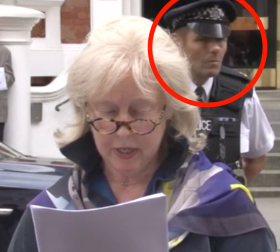
Something that *is* funny is the cop with the flattened visor marching back and forth in the background — promenading, I think — for the sake of the cameras? And the tourists who join him for picture-taking. People are odd. (All of us, I mean.)

Press Association video, via The Guardian

– P

The escape of exnzpat, Part 9

Return to Wormwood

My return to Wormwood was a long one.  Twice I lost my way, the first time, along a short corridor:  I discovered it catty-cornered within a small alcove against the wall at the far end of the building.

The corridor, lined with a sack-like material that I believed to be scrim, was long with two turns, one to the right, and the other to the left.  Scrim is an old-fashioned wall covering, once used during the early twentieth and late nineteenth centuries as a base onto which wallpaper is adhered.  I only mention the scrim here because of what happened later, when I retraced my steps.

The same strange process that lit the ballrooms was also present here, but I found it more disconcerting in the narrow space than in that of the vastness of the ballrooms.  The light in the corridor seemed to stretch and distort the narrow space, giving it the appearance of a much longer and much wider area, than it really was.

The corridor led me to a bedroom. Continue reading →

The curse of hypervigilance

image: downwardspiralintothevortex.blogspot.co.nz/ (click)

Recent angst-ridden discussion about comments published on the internet have reminded me of a conclusion I reached when I was myself the subject of scurrilous anonymous comment: It can bloody hurt.  But some of the pain is, sadly, self-inflicted.

We’ve seen again and again how anonymity seems to loosen people’s grip on civility. Some of the foulest things are written by people hiding behind ‘handles’ … or bloggers who maintain a nom-de-plume or alter-ego/secret identity.

It’s natural to feel offended and hurt by what you perceive as ‘attacks’ from others. Somehow, that offence is multiplied when your accuser/libeler does it from behind a mask.

But here’s the thing I want to get to: Mostly, the rest of the world really doesn’t give a rat’s arse what other people, especially anonymous people, spit on you. Seriously.

As Eleanor Roosevelt is credited with saying (I always thought it was Oscar Wilde):

“You wouldn’t worry so much about what others think of you if you realized how seldom they do.”

Speaking from my own personal experience, I would sometimes feel wounded by reading misleading statements, abuse and innuendo published about me. Remember, Lemony Snickett’s distinction about reading bad news…

“It is much, much worse to receive bad news through the written word than by somebody simply telling you, and I’m sure you’ll understand why. When somebody simply tells you bad news, you hear it once, and that’s the end of it. But when bad news is written down, whether in a letter or a newspaper or on your arm in felt tip pen, each time you read it, you feel as if you are receiving the news again and again.

Lies and nasty comments published on internet forums would sometimes seem to ‘shriek’ at me. Demanding my attention, it seemed. I know from others the ‘Oh my, what are they saying now?’ thing can also be unsettling. (That aspect doesn’t worry me too much.)

But remember this:

Continue reading →

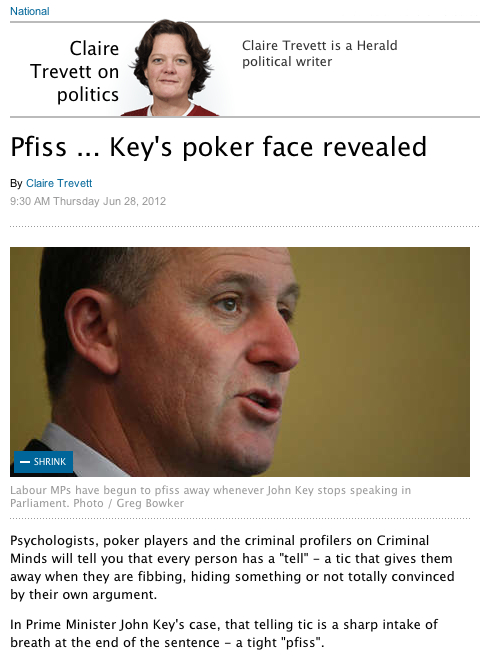
Taking the pfiss out of John Key

Wow. The honeymoon is well-and-truly over: Here’s open comment that the NZ Prime Minister is routinely observed “fibbing, hiding something or not totally convinced by [his] own argument”.

NZ Herald writer Claire Trevett dismantles John Key. Gosh. (click)

‘How are the mighty fallen!’1

This is just as devastating, in a different way, as what a former NZ Herald editor said in John Key’s media whack-a-mole ‘tactical’ — Gavin Ellis or the ‘Leave John Key Alone’ youtube spoof. (Meaning: not very.)

– P

1 II Samuel 1:25

Speaking up for Madeleine Flannagan

The following is an anonymous comment in support of Madeleine Flannagan, who features in my recent post, ‘Implications of recent internet gagging attempt‘.

UPDATE: The comment is now in the comment stream of the relevant post.

Cat 1 – Blow-up giraffe 0

I came out to the lounge this morning and …

Click to enlarge

– P

see also: I think my cat must read my blog

Some useful cyber citizen guidelines

It’s funny how even from people’s intended blows you can learn something valuable.

The short version - image: flickr/rantz (click)

A couple of years ago when I was blogging about the dubious operations of a gaggle of ‘internet marketing experts’ (cough) somebody, by a remarkable coincidence, set up a number of blogs linking my name to keywords like ‘scam’ and ‘ripoff’ (see ‘Internet ninja cowboys … spoofing revisited‘) and tried to subscribe this blog’s email address to ‘spam me’ lists and dozens of email newsletters and websites, including what appears to be a gay dating site.

At the time I blogged (see ‘Internet ninja cowboys … or schoolboys?‘) how a robot mail list gatekeeper was smart enough to realize it probably wasn’t me subscribing to all those newsletters, automatically ignored the subscribe requests, and gave me a profile of the sort of angry dork that does that sort of thing.

Gmail filters the spam really well. Some services, however — including the gay dating website — have harmlessly kept the fake account alive on their lists (I’d need to log in to unsubscribe, the tweebs have the log in details and I can’t be bothered). Nothing generally arrives.

Today, though, an updated privacy policy/terms of conditions from that website arrived … and it’s really good! It includes this section, which I would be happy to adapt for use here on The Paepae:

Content Removal. The Company reserves the right, but has no obligation, to monitor the information or material you submit to the Service or post in the public areas of the Service. The Company will have the right to remove any such information or material that in its sole opinion violates, or may violate, any applicable law or either the letter or spirit of this Agreement or upon the request of any third party.

Posting and Communication Restrictions. You will not post on the Service, transmit to other users, communicate any content (or links thereto), or otherwise engage in any activity on the Site or through the Services, that:

  • promotes racism, bigotry, hatred or physical harm of any kind against any group or individual;
  • is intended to or tends to harass, annoy, threaten or intimidate any other users of the Site or Services;
  • is defamatory, inaccurate, abusive, obscene, profane, offensive, sexually oriented, obscene or otherwise objectionable;
  • contains others’ copyrighted content (e.g., music, movies, videos, photographs, images, software, etc.) without obtaining permission first;
  • contains video, audio photographs, or images of another person without his or her permission (or in the case of a minor, the minor’s legal guardian);
  • promotes or enables illegal or unlawful activities, such as instructions on how to make or buy illegal weapons or drugs, violate someone’s privacy, harm or harass another person, obtain others’ identity information, create or disseminate computer viruses, or circumvent copy-protect devices;
  • intended to defraud, swindle or deceive other users of the Service;
  • contains viruses, time bombs, trojan horses, cancelbots, worms or other harmful, or disruptive codes, components or devices;
  • promotes or solicits involvement in or support of a political platform, religion, cult, or sect;
  • disseminates another person’s personal information without his or her permission, or collects or solicits another person’s personal information for commercial or unlawful purposes;
    Continue reading →

When friends try to ‘help’

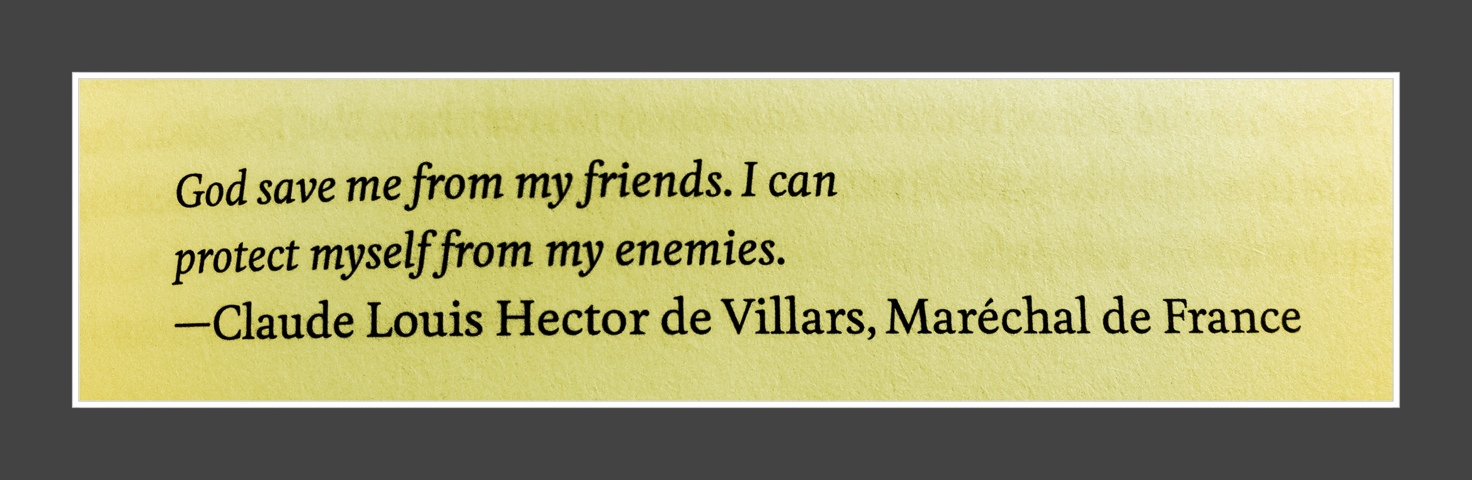
I was at a book launch with my pal and fellow publisher Roger on Sunday afternoon at the excellent Women’s Bookshop in Ponsonby, and saw this saying in a book of reflections on quotations by Elizabeth Smither. 1

20120626-144903.jpg

It’s a sentiment which I have expressed many times over the years, usually in bewildered exasperation — but I’d never sought out the source. (Thanks Elizabeth!)

– P

1 The Commonplace Book of Quotations: A writer’s journey through quotations. AUP.

Guest post: Andrew King responds to Dean Letfus feature

You may recall my post The trajectory of property spruiker Dean Letfus which was the blog equivalent of a sharp intake of breath at the positioning of Dean Letfus‘s smiling face on the cover of the NZ Property Investor magazine.

I wasn’t the only one surprised at that placement, or the soft ride he was given in the article. Here’s Andrew King, NZPIF President’s column from the latest (June) issue…

Be careful who you trust

by Andrew King

There are many indicators pointing to an improving property market. The economy is doing well, affordability is back to levels last seen 10 years ago, Interest rates are predicted to stay low for longer, demand is increasing yet new building consents are still quite low.

Auckland and Christchurch may be leading the property recovery, but other areas will no doubt follow as their local economies improve.

Many PIA [Property Investor Association] members I have spoken to over the last two years have been selectively buying rental property in anticipation of this improvement. It is apparent that new or aspirational investors’ are not in the market yet, however it is only a matter of time.

As the market improves there will be an increasing need for good information so that new investors make informed decisions and fewer mistakes.

No doubt there will be an influx of commercial enterprises to fulfil this need for information. Some will be good and some will be worse than a waste of time, they will be dangerous.

The lead article in the NZ Property Magazine last month was an excellent warning to investors looking to find help with their investment strategies.

After attending a Richmastery course on investment property and buying 13 properties in seven months, Dean Letfus said that he realised he was “different”. He certainly was. With scant information and no real knowledge, he called himself a property professional and educator. Using his belief in god to gain people’s trust, he established himself as a property mentor and charged large fees to share his self-prescribed professionalism.

Unfortunately Dean mistook reckless risk taking and naive strategic knowledge as professionalism and expertise.  During an incredible period of increases in property prices, Dean not only didn’t manage to improve his financial situation, unfortunately for him he went bankrupt. Continue reading →

Trust us …

Emmerson from NZ Herald 26/6/12 (click)

No further comment necessary.

– P

McDonalds putting their best foot forward?

I like this behind-the-scenes approach to marketing. Good on them. But I’ll never forget the author of The E-Myth Michael Gerber’s description of McDonalds food as “an acceptable level of mediocrity”.

via Mashable

Implications of recent internet gagging attempt

UPDATE June 2013 — There have been developments on this. See this post:
Is this what we want? Internet ‘take down’ and indefinite gagging orders?
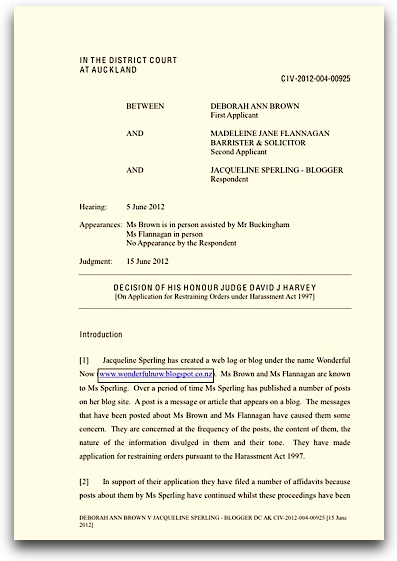

The decision in a recent court case involving allegations of harassment by blog post is instructive on all sorts of levels for what it tell us about the state of internet comment and criticism.

Let’s quickly outline what happened:

Auckland District Court Judge David Harvey was asked by Ms Brown and Madeleine Flannagan to grant restraining orders under the Harassment Act on Auckland blogger Jacqueline Sperling.

Effectively, the plaintiffs Brown and Flannagan were seeking to gag a blogger.

Judge Harvey is no innocent neophyte when it comes to these important matters: the boundaries between criticism, derogatory statements, defamation, public information and free speech. I’ve quoted him before here on The Paepae in discussion about blogger Cameron Slater’s convictions for breaching name suppression orders via blog. In that respect, I regard his opinions seriously from an intellectual point of view, not just a legal standpoint.

As he points out in his judgement, the application came from two bloggers well familiar with the cut-and-thrust and tone of debate in the blogosphere and the greatly-reduced privacy of people who choose to be part of that ‘community’: Ms Brown and Madeleine Flannagan.

In their affidavits to the court they claimed ‘distress’ at reading what another blogger/ex-friend wrote about them on her blog. They claimed it amounted to harassment. Judge Harvey agreed that the statements and “the combative and aggressively critical tone of her [Ms Sperling’s] blogs” were likely offensive, even meeting the criteria of ‘specified acts’ in terms of the Harassment Act (I might be seen as guilty of that myself, btw), and crucially found:

“But the static or passive blog post cannot, in my view be causative of distress and it cannot be said to be so if a person accesses the material by their own act of choice. By that act that person has taken the communication flow out of the control of the blogger and has assumed control of it.” [230]

So, while Brown-Flannagan may have been distressed (or not, see below) he showed that for the most part, the plaintiffs themselves navigated to the blog to read it (except in the case of a link to her blog post being sent to Mrs Flannagan’s employer)1. So, as I read the judgement, the ‘instrusive’ and ‘causative’ tests required for the comments to be actionable under the Harassment Act were not met.

Judge Harvey told the plaintiffs they had contributed to their own distress and, effectively, that they should stop reading nasty things written about them if doing so upset them so much.

He said Ms Brown couldn’t complain about photos already published on the internet being used, nor about being ‘talked about’: “…there may have been distress it was not directly caused by the posts of Ms Sperling but flowed from Ms Brown’s own engagement with the Internet and particularly the blogosphere.” [239]

Mrs Flannagan likewise, wasn’t seen by Judge Harvey as a babe in the woods:

“Ms Flanagan is also a denizen of the Internet space and an active one too. She has a “real world” profile as well and has involved herself in matters of controversy – such as the abortion debate. She, like Ms Brown, is well aware of the robust nature of communication within the Blogosphere and has little hesitation in participating in debate, contributing to comments and actively engaging in discussion. [241]

… Ms Flannagan, like Ms Brown, engaged and was prepared to enter the lists with Ms Sperling. In view of her awareness of the, at times heated, nature of the debate I consider that a reasonable person may well conclude that she might get burned. In addition she made unprompted visits to Ms Sperling’s website and in that regard could be said to have contributed to her own distress, if indeed there was any.” [242] emphasis added

In other words, they had to expect some harsh comment. Get over it.

I’ve observed enough court hearings and read enough decisions to recognize the judge’s code words ‘there may have been distress’ (Brown) and ‘[Flannagan] contributed to her own distress, if indeed there was any‘ remarks for what they are: pointers that he kinda-sorta found Ms Brown’s and Mrs Flannagan’s claims of ‘distress’ implausible.

The result: Judge Harvey dismissed their application for restraining orders, saying very clearly that while the comments on the defendant’s blog may have been offensive, insulting and even qualified as ‘specified acts’ as far as the Harassment Act was concerned, in all but one incident, they couldn’t be seen as ‘causative’ of any ‘distress’ because the plaintiffs effectively sought the comments out.

That is an important distinction, and as a blogger who is on occasion, harshly critical of other people — by name — myself, I’m grateful that Brown-Flannagan took their (flawed and failed) court action which sees that issue clarified like this.

But it’s too bad Jacqueline Sperling had to pay the emotional price for this. The ghastly smears directed at her by team Brown-Flannagan sock puppets and anonymous proxies are disgusting. The Christianity which is claimed to be a common inspiration of the participants in this melodrama is not making much of an impact from where I sit. An anonymous blogger supposedly defending Madeleine Flannagan is peddling very nasty stuff in attempts to discredit Ms Sperling. I guess he’ll be at church on Sunday. He may not realize he’s not actually doing Flannagan’s reputation any favours.

The case failed before even reaching the hurdle of the NZ Bill of Rights Act ‘freedom of expression’ clauses, although Judge Harvey, as one would expect, touches on those — emphasizing the obvious truth that freedom of expression is only a challenge if you disagree with what’s being expressed. As I sometimes do.

Continue reading →

Assange allegations deeply fishy with dangerous undertones

Graphic from Huffington Post. But seriously, read Rundle's article on Crikey.com.au (click).

I’ve always said the allegations (not actually criminal charges) against Julian Assange seemed like a jack-up and a smear campaign. What do you think?:

2) The process by which Assange was accused, cleared, and then re-accused of these incidents beggars belief. Two women went to a Stockholm police station one Friday afternoon in August 2010, to either (and here accounts vary) report Assange for s-xual misconduct, or inquire as to how he could be forced to take an STI test. Only one woman, Sofia Wilen, gave a statement, saying that the morning after a s-xual encounter with Assange, he had initiated s-x while she was asleep, and without a condom; by her own testimony, she said that she then gave consent to continue the act.

3) While her statement was being given, police had already contacted a prosecutor to issue an investigation warrant for arrest. When Wilen was informed of this, she refused to sign her own evidence statement, saying that she had been pushed into making a complaint by people around her. The next day, the senior prosecutor for Stockholm rescinded the warrant, saying that there was nothing in the statement suggesting a crime had occurred.

4) By Monday, that decision had been appealed, with the two women now represented by Claes Borgstrom, a big wig in the Social Democratic party, and drafter of the 2005 s-x crimes laws under which Assange was being accused — laws that many had said were unworkable. The second complainant in the affair, Anna Ardin, now changed her story. She had been interviewed the day after Wilen had told of a rough but consensual s-xual encounter with Assange, but suggested he had torn a condom off during s-x.

5) In the weeks between the Stockholm prosecutor rejecting Wilen’s statement as evidence of a potential crime, and the appeal, Ardin’s story changed, and her account of rough consensual foreplay became an accusation that Assange had pinned her down with his body during s-x to prevent her applying a condom. This became the basis for a new accusation — s-xual coercion — which would have been sufficient as a felony, should the appeal prosecutor not reinstate Wilen’s r-pe accusation. In that week, tweets were deleted and blog posts changed to remove any suggestion that Ardin had thought Assange’s behaviour to her consensual.

6) The prosecutor to whom the appeal was made — Marianne Ny — was a former head of the “Crime Development Unit”, whose specific brief was to develop new applications of s-x crimes laws, in areas where they had not previously been applied. She had previously spoken of remand as a form of de facto justice for men accused of s-x crimes, whom the courts would otherwise let free.

7) The European arrest warrant, and the Interpol red notice under which Assange is being extradited, was issued with a speed and seriousness usually reserved for major violent criminals, rather than someone simply wanted for further questioning, without a charge being present.

From Guy Rundle: Assange makes his escape into a diplomatic storm Crikey.com.au